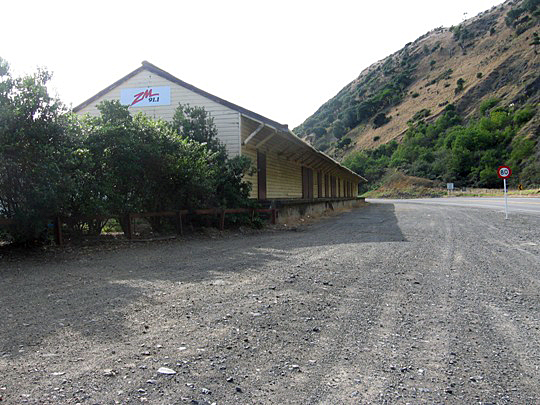
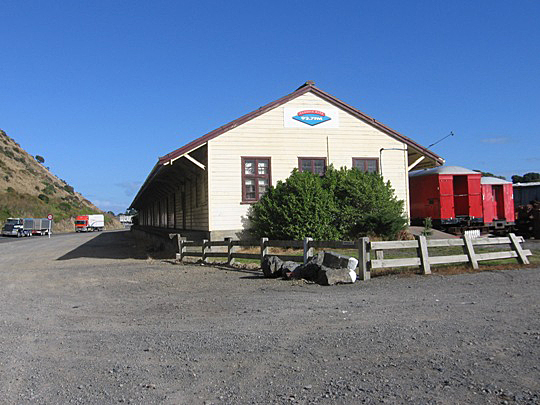
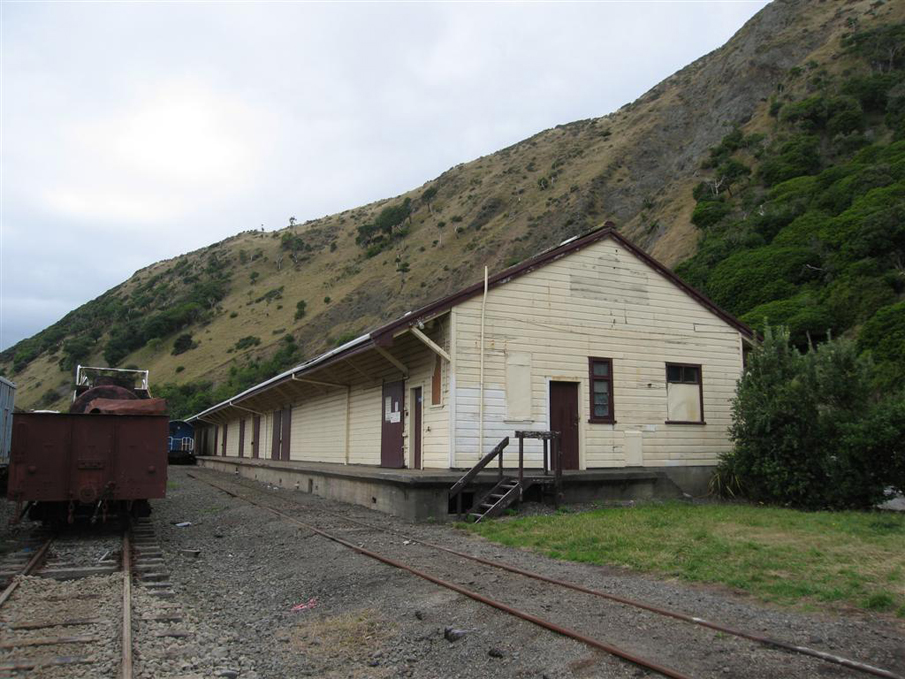
The former Commissary Shed (also known as the ‘Rail-Air Shed’), built in 1942 for the associated US Marines camps at Paekākāriki, has historical significance as a demonstration of New Zealand’s role in the allied response to the Pacific War against Japan. It is a rare surviving structure to represent the transformation of New Zealand localities such as Kapiti when they accommodated the US Marines and defence activity. Its subsequent use demonstrates evolutions in the transportation of freight.
At the start of the nineteenth century Kapiti was inhabited by Rangitāne, Muaūpoko, and Ngāti Apa, who had intermarried with Ngāti Ira people. From 1822 successive waves of hapū and whanau from Kawhia and Taranaki moved to the region, led by Ngāti Toa chief Te Rauparaha who valued Kapiti’s strategic location for trading with the European whalers who were beginning to frequent Cook Strait. Conflicts between the groups resulted in tribal boundaries being redrawn and Ngāti Toa Rangatira, Ātiawa ki Whakarongotai and Ngāti Raukawa ki te Tonga became mana whenua along the Kapiti Coast. Ngāti Haumia ki Paekākāriki have maintained ahikā at Paekākāriki.
European colonisation reduced Māori lands near Paekākāriki. The township developed after construction of the Wellington-Manawatū Railway (WMR) in 1886 increased accessibility to the area. The railway was integral to the village.
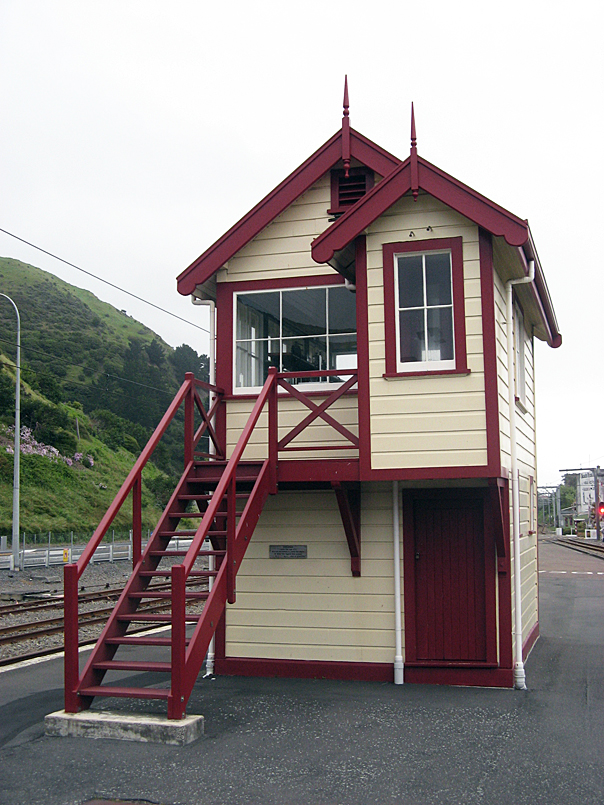
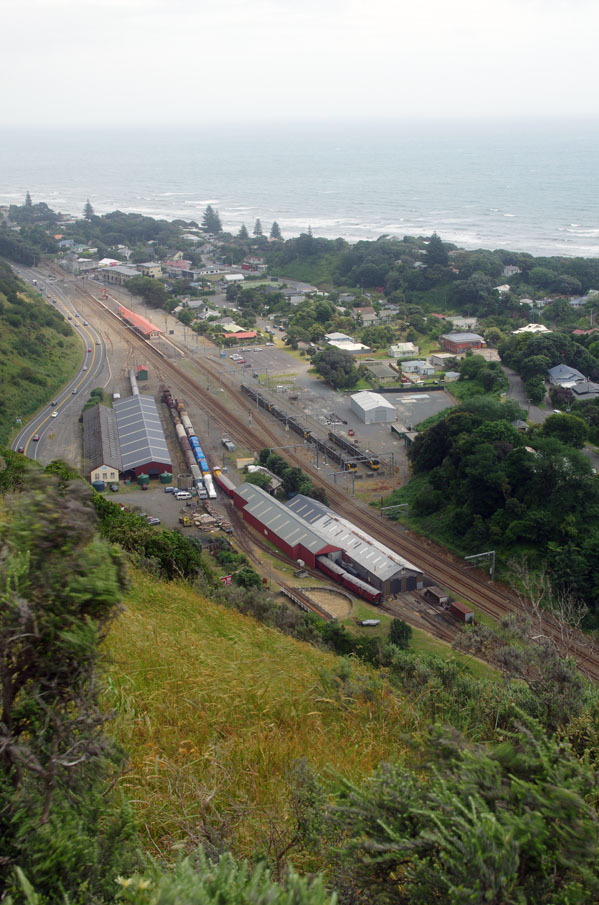
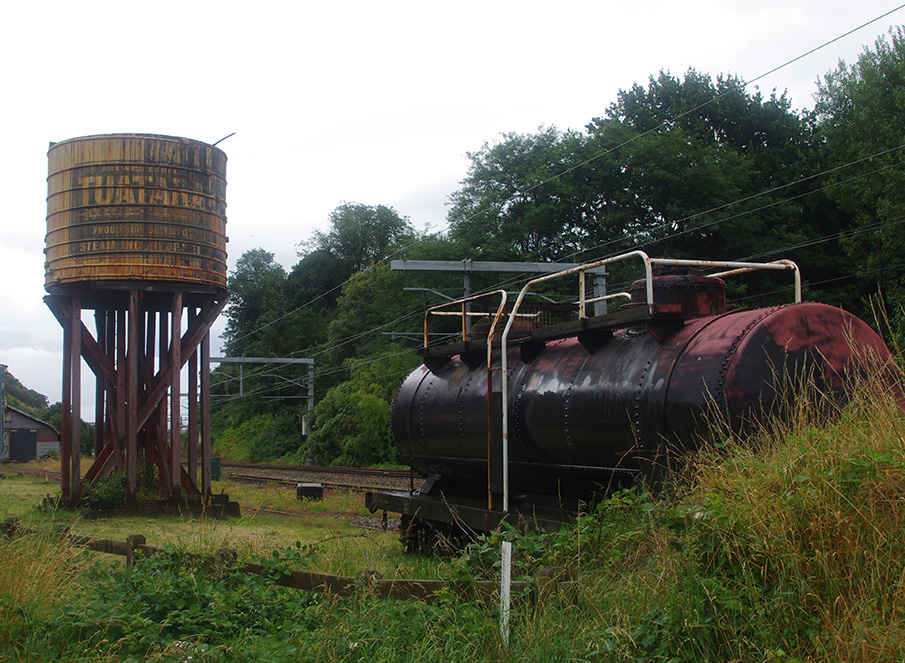
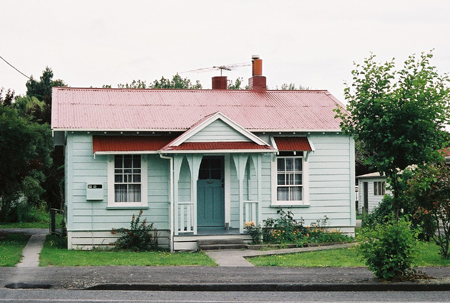
Soon after the Government incorporated the WMR into the North Island Main Trunk Line in 1908, the station was replaced with a larger building, designed by NZ Railways Department Architect George Troup, with tearooms a popular passenger stop. The enlarged yards could accommodate very large trains, and the complex grew to contain two signal boxes, water vats for the steam engines, a locomotive depot, turntable, sheds and workers’ cottages. In 1940 Paekākāriki Station became the point at which trains swapped from steam (later diesel) to electric motive power.
Two years into World War Two, the Japanese attack on Pearl Harbour in December 1941 brought the threat of invasion sharply into focus for New Zealand. Our government joined the declaration of war on Japan, and began hosting US Marines in a mutually beneficial arrangement: New Zealand was a strategic post for the US Military’s operations in the Pacific, while the Marines strengthened our defences. Three large camps were built at the north of Paekākāriki to accommodate 15,000 US servicemen, swelling the small seaside village from June 1942.
Construction of a railway goods shed to handle stores for the Paekākāriki camps was ordered by Army authorities on 7 July 1942, and was completed before the end of that year. Located between an existing siding and the main highway, the ‘commissary’ shed was 82 metres long x 9 metres wide, clad in weatherboards with a fibrolite roof. A low platform allowed lorries to transfer goods and materials for building the expanding camps. The south end housed refrigerated storage, with a post office and shop for the troops at the north. Chalk sketches on the interior walls of the Communications room are a unique surviving feature, believed to have been drawn by Marines.
However, in November 1943 the US Marines permanently left New Zealand, when they were deployed to Tarawa Atoll in Kiribati. Ownership of the shed passed to the Railways Department in 1946. In 1947, NZ Railways introduced a ‘Rail-Air’ freight system to redistribute goods flown into Paraparaumu airfield from Blenheim, and the shed became the main sorting, weighing and storage depot for the Wellington region. This use dwindled after 1959 with the introduction of the rail ferries and the development of Wellington Airport. In 1984, locomotive heritage group Steam Incorporated began leasing the building for storage. In 2001 the shed, land, sidings and turntable were transferred to their ownership. In 2011 they constructed a large new carriage shed immediately adjacent to the Commissary shed’s seaward side. The Marines’ shed and its lorry loading platform remains prominent from State Highway 59 and features interpretation signage at its north end.
At the start of the nineteenth century Kapiti was inhabited by Rangitāne, Muaūpoko, and Ngāti Apa, who had intermarried with Ngāti Ira people. From 1822 successive waves of hapū and whanau from Kawhia and Taranaki moved to the region, led by Ngāti Toa chief Te Rauparaha who valued Kapiti’s strategic location for trading with the European whalers who were beginning to frequent Cook Strait. Conflicts between the groups resulted in tribal boundaries being redrawn and Ngāti Toa Rangatira, Ātiawa ki Whakarongotai and Ngāti Raukawa ki te Tonga became mana whenua along the Kapiti Coast. Ngāti Haumia ki Paekākāriki have maintained ahikā at Paekākāriki.
European colonisation reduced Māori lands near Paekākāriki. The township developed after construction of the Wellington-Manawatū Railway (WMR) in 1886 increased accessibility to the area. The railway was integral to the village.
Soon after the Government incorporated the WMR into the North Island Main Trunk Line in 1908, the station was replaced with a larger building, designed by NZ Railways Department Architect George Troup, with tearooms a popular passenger stop. The enlarged yards could accommodate very large trains, and the complex grew to contain two signal boxes, water vats for the steam engines, a locomotive depot, turntable, sheds and workers’ cottages. In 1940 Paekākāriki Station became the point at which trains swapped from steam (later diesel) to electric motive power.
Two years into World War Two, the Japanese attack on Pearl Harbour in December 1941 brought the threat of invasion sharply into focus for New Zealand. Our government joined the declaration of war on Japan, and began hosting US Marines in a mutually beneficial arrangement: New Zealand was a strategic post for the US Military’s operations in the Pacific, while the Marines strengthened our defences. Three large camps were built at the north of Paekākāriki to accommodate 15,000 US servicemen, swelling the small seaside village from June 1942.
Construction of a railway goods shed to handle stores for the Paekākāriki camps was ordered by Army authorities on 7 July 1942, and was completed before the end of that year. Located between an existing siding and the main highway, the ‘commissary’ shed was 82 metres long x 9 metres wide, clad in weatherboards with a fibrolite roof. A low platform allowed lorries to transfer goods and materials for building the expanding camps. The south end housed refrigerated storage, with a post office and shop for the troops at the north. Chalk sketches on the interior walls of the Communications room are a unique surviving feature, believed to have been drawn by Marines.
However, in November 1943 the US Marines permanently left New Zealand, when they were deployed to Tarawa Atoll in Kiribati. Ownership of the shed passed to the Railways Department in 1946. In 1947, NZ Railways introduced a ‘Rail-Air’ freight system to redistribute goods flown into Paraparaumu airfield from Blenheim, and the shed became the main sorting, weighing and storage depot for the Wellington region. This use dwindled after 1959 with the introduction of the rail ferries and the development of Wellington Airport. In 1984, locomotive heritage group Steam Incorporated began leasing the building for storage. In 2001 the shed, land, sidings and turntable were transferred to their ownership. In 2011 they constructed a large new carriage shed immediately adjacent to the Commissary shed’s seaward side. The Marines’ shed and its lorry loading platform remains prominent from State Highway 59 and features interpretation signage at its north end.