DonateMembershipVisit Heritage
  • Tūrangawaewae
    Places
  • Tira Māori
    Māori Heritage
  • Poutairangahia
    Archaeology
  • Rauemi
    Resources
  • Mō Tātou
    About Us
  • New Zealand Heritage List
  • Nominate and submit
  • Explore the List
  • National Historic Landmarks
  • Plaques
  • Rainbow List Project
  • Lost heritage
  • Visit Heritage
  • Our properties
  • Turnbull House Project
  • Collections
  • Shop
  • Tohu Whenua
  • Tira Māori
  • Conserving Māori heritage
  • Marae built heritage
  • Māori heritage on the List
  • Hinemihi—Te Hokinga Mai
  • What is archaeology?
  • Is there a site on my property?
  • What are my legal requirements?
  • Affecting an archaeological site
  • Declaring an archaeological site
  • Archaeology FAQs
  • Archaeology Digital Library
  • Archaeology guidelines and templates
  • Resources
  • Funding
  • Publications
  • Sustainable management guides
  • Disaster recovery
  • Podcasts & digital resources
  • Education Hub
  • Conservation plans
  • About
  • Board
  • Māori Heritage Council
  • Senior Staff
  • Offices
  • Contact us
  • Careers
  • Covenants
  • Fast-track
  • Corporate documents
  • Currently consulting on
  • Our submissions
  • News
  • Covid-19 response
Quick links
Rārangi Kōrero | The List
Explore the List
National Historic Landmarks
Ngā Manawhenua o Aotearoa me ōna Kōrero Tūturu
Quick links
Tapuwae
A Vision for Places of Māori Heritage
Funding for Māori Heritage
Resources
Quick links
Archaeological Authority Portal
Applying for an archaeological authority
Archaeology FAQs
Browse the most frequently asked questions about archaeological authorities and the archaeological process.
Quick links
Quick links
News
News Keep up to date with Heritage New Zealand Pouhere Taonga
Membership
Membership Find out more and sign up today
DonateMembershipVisit Heritage
  • Tūrangawaewae
    Places
  • Tira Māori
    Māori Heritage
  • Poutairangahia
    Archaeology
  • Rauemi
    Resources
  • Mō Tātou
    About Us
  • New Zealand Heritage List
  • Nominate and submit
  • Explore the List
  • National Historic Landmarks
  • Plaques
  • Rainbow List Project
  • Lost heritage
  • Visit Heritage
  • Our properties
  • Turnbull House Project
  • Collections
  • Shop
  • Tohu Whenua
  • Tira Māori
  • Conserving Māori heritage
  • Marae built heritage
  • Māori heritage on the List
  • Hinemihi—Te Hokinga Mai
  • What is archaeology?
  • Is there a site on my property?
  • What are my legal requirements?
  • Affecting an archaeological site
  • Declaring an archaeological site
  • Archaeology FAQs
  • Archaeology Digital Library
  • Archaeology guidelines and templates
  • Resources
  • Funding
  • Publications
  • Sustainable management guides
  • Disaster recovery
  • Podcasts & digital resources
  • Education Hub
  • Conservation plans
  • About
  • Board
  • Māori Heritage Council
  • Senior Staff
  • Offices
  • Contact us
  • Careers
  • Covenants
  • Fast-track
  • Corporate documents
  • Currently consulting on
  • Our submissions
  • News
  • Covid-19 response
Quick links
Rārangi Kōrero | The List
Explore the List
National Historic Landmarks
Ngā Manawhenua o Aotearoa me ōna Kōrero Tūturu
Quick links
Tapuwae
A Vision for Places of Māori Heritage
Funding for Māori Heritage
Resources
Quick links
Archaeological Authority Portal
Applying for an archaeological authority
Archaeology FAQs
Browse the most frequently asked questions about archaeological authorities and the archaeological process.
Quick links
Quick links
News
News Keep up to date with Heritage New Zealand Pouhere Taonga
Membership
Membership Find out more and sign up today
  • Places
  • Nominate and submit
  • National Historic Landmarks
  • Places
  • Nominate and submit
  • National Historic Landmarks
  • Tira Māori
  • Conserving Māori heritage
  • Marae built heritage
  • Tira Māori
  • Conserving Māori heritage
  • Marae built heritage
  • Archaeological authorities
  • Archaeology Digital Library
  • Archaeological authorities
  • Archaeology Digital Library
  • All resources
  • Publications
  • Funding
  • All resources
  • Publications
  • Funding
  • FAQs
  • FAQs
Follow us on:
Places
  • Places
  • Nominate and submit
  • National Historic Landmarks
Tira Māori
  • Tira Māori
  • Conserving Māori heritage
  • Marae built heritage
Archaeology
  • Archaeological authorities
  • Archaeology Digital Library
Resources
  • All resources
  • Publications
  • Funding
FAQs
  • FAQs
Follow us on
HomePrivacyTerms and conditionsAbout this site
© Heritage New Zealand Pouhere Taonga 2026.
 
Pits

Iwinui Station, Tauwhareparae Road, TOLAGA BAY

Private

Historic Place Category 2

List No. 6531

Quick links:
List GalleryLocationDetails
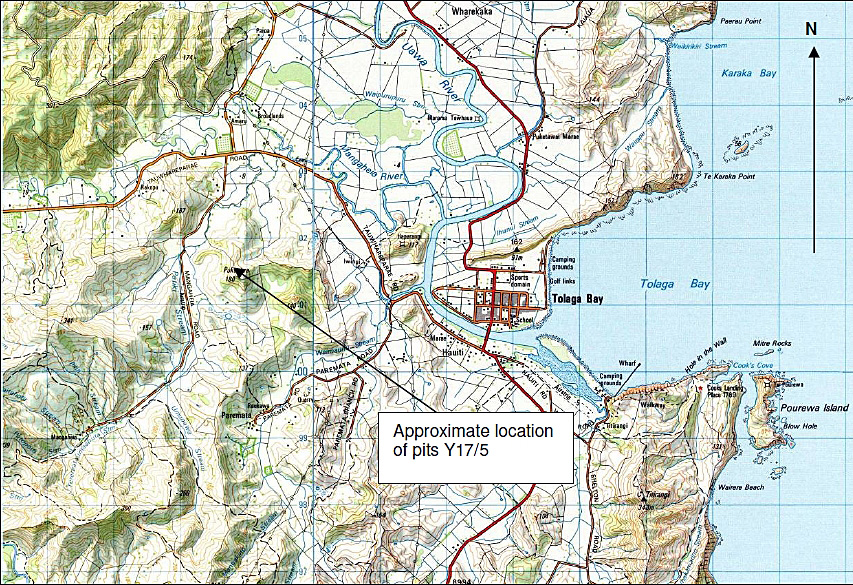
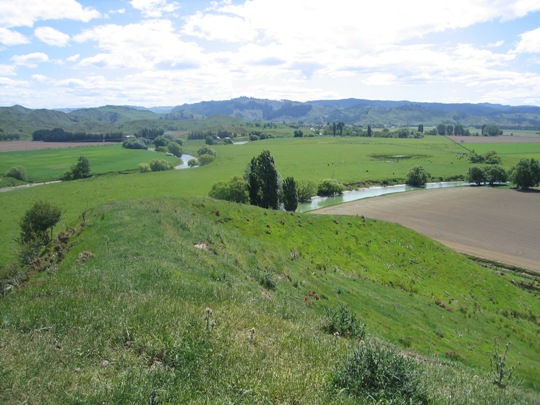
New Zealand Archaeological Association Site Record Number Y17/5 is a pit site that forms part of the dense archaeological landscape of the Tolaga Bay (Uawa) area. It is located on Iwinui Station, to the west of the Tolaga Bay township.

Pit sites and the many other recorded archaeological sites including pa, midden, gardens and urupa reflect the intensive Maori occupation of the Tolaga Bay from the time of initial Polynesian settlement approximately 700 years ago. Access to abundant food resources from the sea, rivers, inland forests and horticultural production (kumara) meant that a large population could be sustained. It has been estimated that the early Maori population of Tolaga Bay totalled approximately 1200; and the main iwi was Te Aitanga a Hauiti.

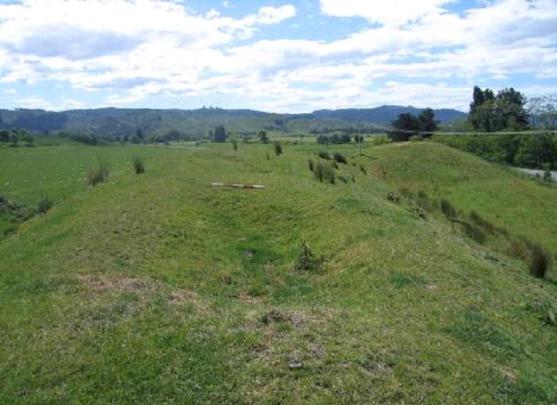
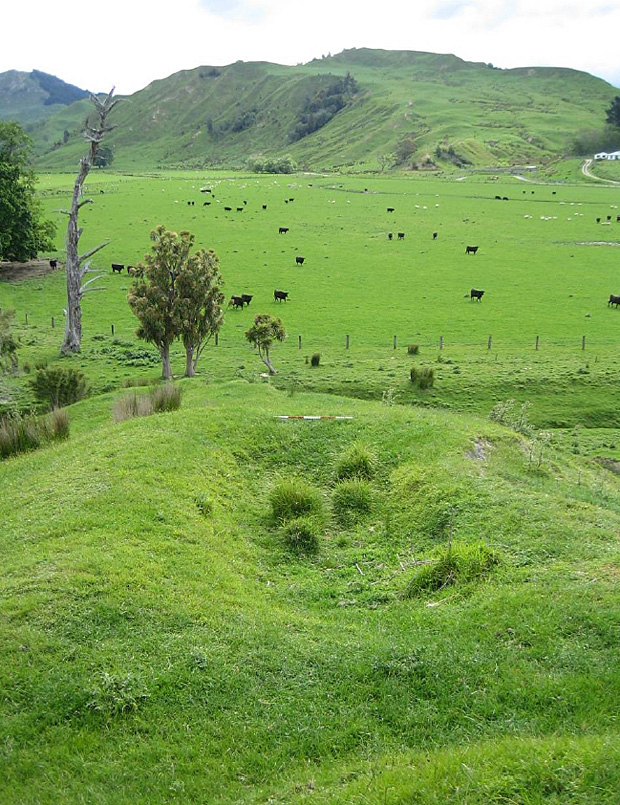
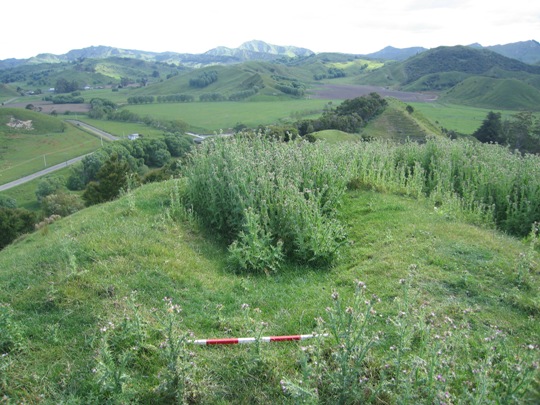
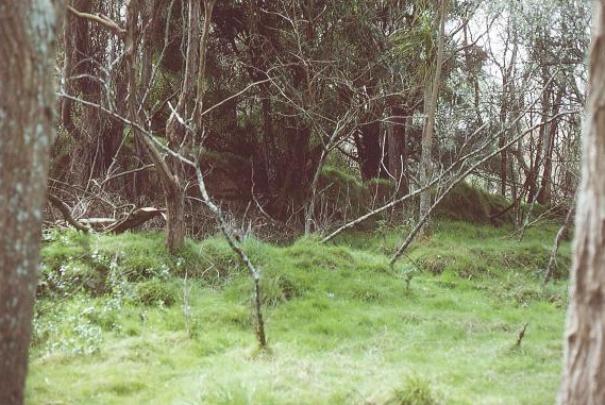
Pit and pit/ terrace sites are very common in Tolaga Bay, and demonstrate the importance of horticulture to Tolaga Bay's earliest inhabitants. The Bay's fertile soils and temperate climate were well suited to kumara gardening, and the pits were used for storing harvested kumara over the winter months. Rectangular storage pits (which were once roofed with a layer of earth), are more prevalent than the underground storage pits found elsewhere in New Zealand, a pattern attributed to the harder substrate of the soil in this area. They are in fact the most common archaeological site type in Tolaga Bay, and are found along the river banks and on the rolling hills to the south of the Bay. They are generally located in clusters on knolls or terraces, or on ridge crests, in lines from end to end, as found with this site -Y17/5.

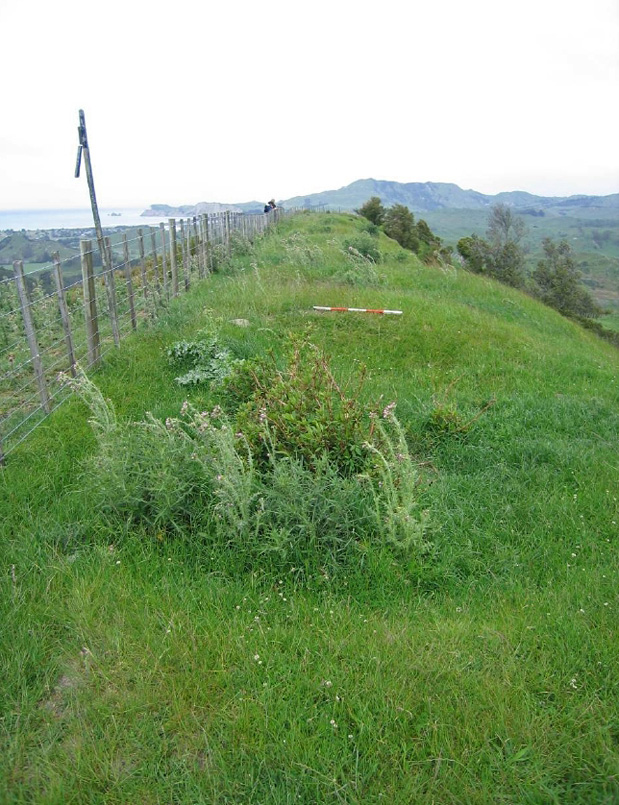
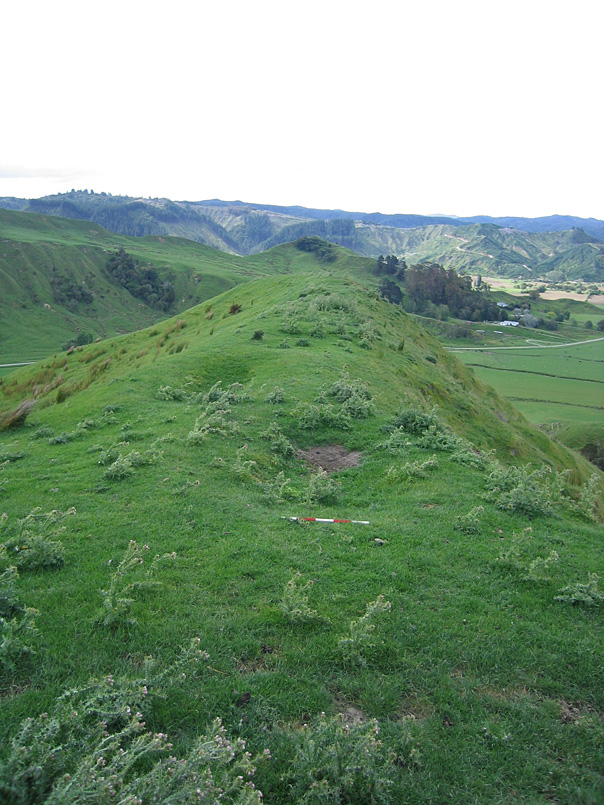
Pit site Y17/5 is located on the steep east-west running ridgeline where Pukeatua trig is located, approximately 700-800 metres east of Mangaheia Road. The main part of the site extends for approximately 135.5 metres along the ridge top, which is bisected by a fence line. There are a number of other recorded archaeological sites (mostly pits and pits/ terraces) in the vicinity, such as pit site Y17/127, approximately 270 metres north along the ridgeline.

This site was first recorded by field workers from the Gisborne Museum in 1971. It was described as a 'ridge site with pits but no defensive earthworks'. The main part of the site extended along the ridgeline, both to the east and west of the Pukeatua Trig. Pits were also noted in two places on the lower approaching ridges to the west. A sketch plan of the site shows a total of six pits; three are located in a row at the western end of the site, and a further three are located at the eastern end, two of which are positioned side by side. A terrace (0.3 metres deep) is also illustrated at the eastern end of the site.

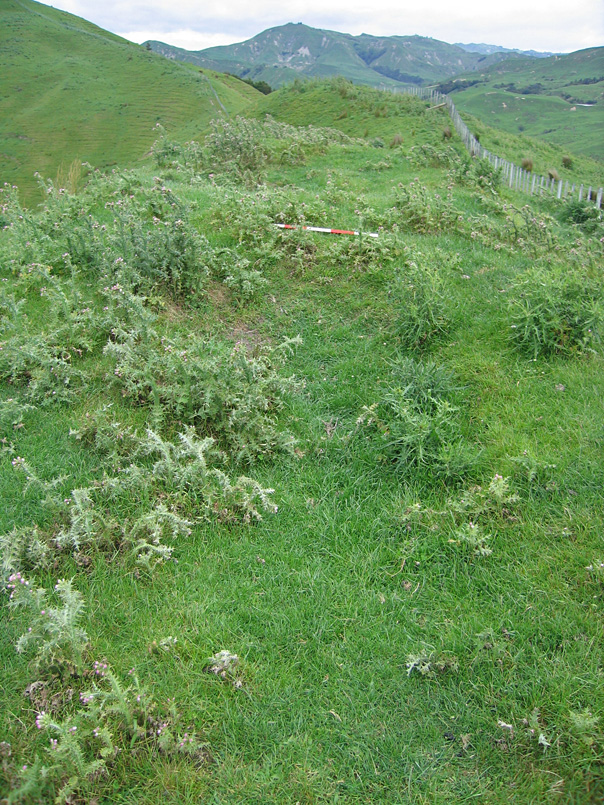
Pit site Y17/5 was revisited by the New Zealand Historic Places Trust in November 2007 and was found to be as originally recorded. However, the pits on the southern side of the fence line were in long pasture and in better condition than those on the northern side though, which had been damaged by stock tracking. A large slip was also noted on the northern side of the fence line. The easternmost pit (which lies to the north of the fence line) was still clearly visible however. A subsequent inspection of a 2008 Google Earth aerial photograph has revealed a possible defensive earthwork feature at the western end of the site (on the southern side of the fence), and some possible pits/ terraces to the south of the eastern end of the site. These features will need to be field checked on the ground at a future date.

Y17/5 is one of numerous pit and pit/terrace sites recorded in the Tolaga Bay area. It is part of a dense archaeological and cultural landscape that is of considerable significance to Te Aitanga a Hauiti, reflecting the intensive Maori occupation and settlement of the Tolaga Bay area since the 14th - 15th centuries AD, and the important role that horticulture played in this.
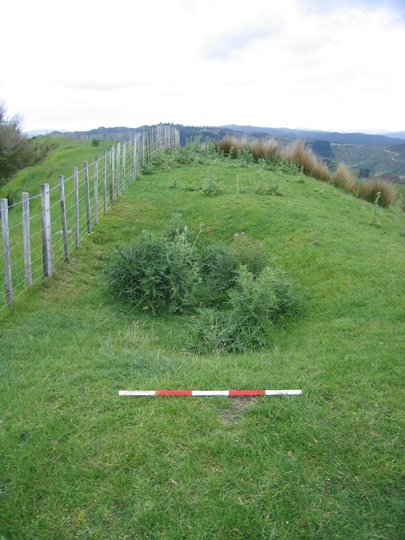
Pits. Close-up of pit on northern side of fence line looking west | Joanna Wylie | 14/11/2007 | Heritage New Zealand
Pits. Look east over pits on southern side of the fence line | Joanna Wylie | 14/11/2007 | Heritage New Zealand
Pits. Regional map of Tolaga Bay and surrounds showing the location of pits Y17/5. Map produced from MapWorld Topomap V2.0 (2) | Heritage New Zealand
Pits. Close-up of pit on northern side of fence line looking west | Joanna Wylie | 14/11/2007 | Heritage New Zealand
Pits. Look east over pits on southern side of the fence line | Joanna Wylie | 14/11/2007 | Heritage New Zealand
Pits. Regional map of Tolaga Bay and surrounds showing the location of pits Y17/5. Map produced from MapWorld Topomap V2.0 (2) | Heritage New Zealand

List Entry Information

Overview

Status
Listed

List Entry Status
Historic Place Category 2

Access
Private/No Public Access

List Number
6531

Date Entered
10th March 1986

Date of Effect
10th March 1986

City/District Council
Gisborne District

Region
Gisborne Region

Extent of List Entry

The registration includes part of the land described as Part Paremata 3A Block, Gisborne Land District and the archaeological site Y17/5 (New Zealand Archaeological Association Site Record Number).

Legal description

Pt Paremata 3A Block (RT GS1C/1268), Gisborne Land District

Detailed List Entry
Reference

Public NZAA Number

Y17/5

Completion Date

8th March 2008

Report Written By

Joanna Wylie

Information Sources

Department of Conservation

Department of Conservation

Jones,1986

Kevin Jones, 'Tolaga Bay - Turangawaewae of Chiefs', Historic Places in New Zealand, No. 2, 1983

New Zealand Journal of Archaeology

New Zealand Journal of Archaeology

New Zealand Archaeological Association (NZAA)

New Zealand Archaeological Association

Report Written By

This place was identified as significant under previous legislation with different information requirements. It remains significant under the current legislation. There is opportunity under our legislation and policies to add to this information. Further information about this place may be available from the Lower Northern Office of Heritage New Zealand Pouhere Taonga. Iwi/ Hapu/ Whanau: Te Aitanga a Hauiti A fully referenced upgrade report is available from the NZHPT Lower Northern Area Office. Please note that entry on the New Zealand Heritage List/Rarangi Korero identifies only the heritage values of the property concerned, and should not be construed as advice on the state of the property, or as a comment of its soundness or safety, including in regard to earthquake risk, safety in the event of fire, or insanitary conditions.

Further Information

Current Usages

Uses: Agriculture

Specific Usage: Farm

Former Usages

Themes

Of Significance to Maori

Web Links

Overview

Status

Listed

List Entry Status

Historic Place Category 2

Access

Private/No Public Access

List Number

6531

Date Entered

10th March 1986

Date of Effect

10th March 1986

City/District Council

Gisborne District

Region

Gisborne Region

Extent of List Entry

The registration includes part of the land described as Part Paremata 3A Block, Gisborne Land District and the archaeological site Y17/5 (New Zealand Archaeological Association Site Record Number).

Legal description

Pt Paremata 3A Block (RT GS1C/1268), Gisborne Land District

Status

Listed

List Entry Status

Historic Place Category 2

Access

Private/No Public Access

List Number

6531

Date Entered

10th March 1986

Date of Effect

10th March 1986

City/District Council

Gisborne District

Region

Gisborne Region

Extent of List Entry

The registration includes part of the land described as Part Paremata 3A Block, Gisborne Land District and the archaeological site Y17/5 (New Zealand Archaeological Association Site Record Number).

Legal description

Pt Paremata 3A Block (RT GS1C/1268), Gisborne Land District

Reference

Historical and Associated Iwi / Hapū / Whānau

Public NZAA Number

Y17/5

Completion Date

8th March 2008

Report Written By

Joanna Wylie

Information Sources

Department of Conservation

Department of Conservation

Jones,1986

Kevin Jones, 'Tolaga Bay - Turangawaewae of Chiefs', Historic Places in New Zealand, No. 2, 1983

New Zealand Journal of Archaeology

New Zealand Journal of Archaeology

New Zealand Archaeological Association (NZAA)

New Zealand Archaeological Association

Other Information

This place was identified as significant under previous legislation with different information requirements. It remains significant under the current legislation. There is opportunity under our legislation and policies to add to this information. Further information about this place may be available from the Lower Northern Office of Heritage New Zealand Pouhere Taonga. Iwi/ Hapu/ Whanau: Te Aitanga a Hauiti A fully referenced upgrade report is available from the NZHPT Lower Northern Area Office. Please note that entry on the New Zealand Heritage List/Rarangi Korero identifies only the heritage values of the property concerned, and should not be construed as advice on the state of the property, or as a comment of its soundness or safety, including in regard to earthquake risk, safety in the event of fire, or insanitary conditions.

Historical and Associated Iwi / Hapū / Whānau

Public NZAA Number

Y17/5

Completion Date

8th March 2008

Report Written By

Joanna Wylie

Information Sources

Department of Conservation

Department of Conservation

Jones,1986

Kevin Jones, 'Tolaga Bay - Turangawaewae of Chiefs', Historic Places in New Zealand, No. 2, 1983

New Zealand Journal of Archaeology

New Zealand Journal of Archaeology

New Zealand Archaeological Association (NZAA)

New Zealand Archaeological Association

Other Information

This place was identified as significant under previous legislation with different information requirements. It remains significant under the current legislation. There is opportunity under our legislation and policies to add to this information. Further information about this place may be available from the Lower Northern Office of Heritage New Zealand Pouhere Taonga. Iwi/ Hapu/ Whanau: Te Aitanga a Hauiti A fully referenced upgrade report is available from the NZHPT Lower Northern Area Office. Please note that entry on the New Zealand Heritage List/Rarangi Korero identifies only the heritage values of the property concerned, and should not be construed as advice on the state of the property, or as a comment of its soundness or safety, including in regard to earthquake risk, safety in the event of fire, or insanitary conditions.

Further Information

Current Usages

Uses: Agriculture

Specific Usage: Farm

Themes

Of Significance to Maori

Current Usages

Uses: Agriculture

Specific Usage: Farm

Themes

Of Significance to Maori

Location

Loading
Related listings
Pits. Looking south over pits at the northern end of the site
Pits
Taharangi
Taharangi
Pits
Pits
Pits
Pits
Pits/ Terraces. Close-up of single raised rim pit on ridge above Patiki Stream looking west
Pits/ Terraces
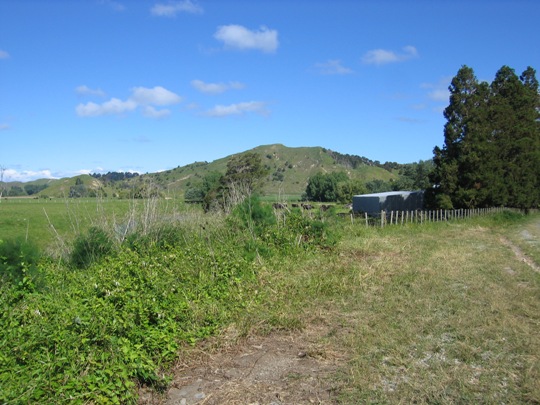
Pits. Overview of the site looking approximately north with Mangeheia Road in the background
Pits
Haparangi. Close up of thistle-filled pit looking southwest - Z17/4
Haparangi
Hikatu
Hikatu
Taharangi and Haparangi
Pits/ Terraces. Close-up of single raised rim pit on ridge above Patiki Stream looking west
Pits/ Terraces
Pits. Looking south over pits at the northern end of the site
Pits
Pits. Overview of the site looking approximately north with Mangeheia Road in the background
Pits
Taharangi
Taharangi
Haparangi. Close up of thistle-filled pit looking southwest - Z17/4
Haparangi
Pits
Pits
Hikatu
Hikatu
Pits
Pits
Taharangi and Haparangi
Stay up to date with Heritage this month