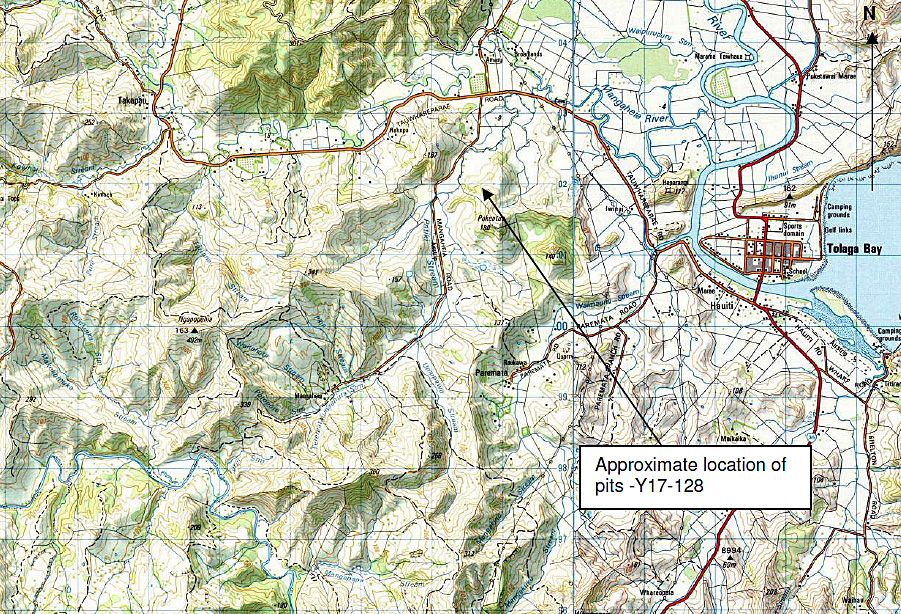
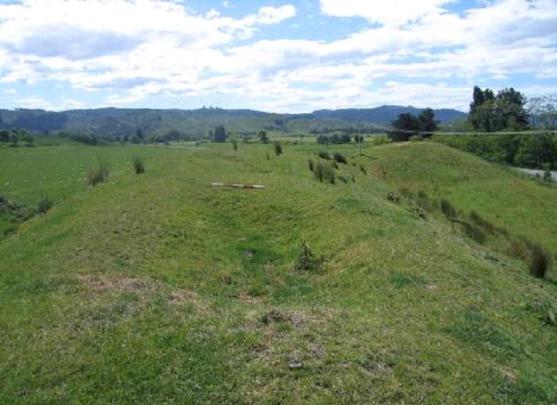
New Zealand Archaeological Association Site Record Number Y17/128 is a pit site that forms part of the dense archaeological landscape of the Tolaga Bay (Uawa) area. It is located on Iwinui Station, to the west of the Tolaga Bay township.
Pit sites and the many other recorded archaeological sites including pa, midden, gardens and urupa reflect the intensive Maori occupation of the Tolaga Bay from the time of initial Polynesian settlement approximately 700 years ago. Access to abundant food resources from the sea, rivers, inland forests and horticultural production (kumara) meant that a large population could be sustained. It has been estimated that the early Maori population of Tolaga Bay totalled approximately 1200; and the main iwi was Te Aitanga a Hauiti.
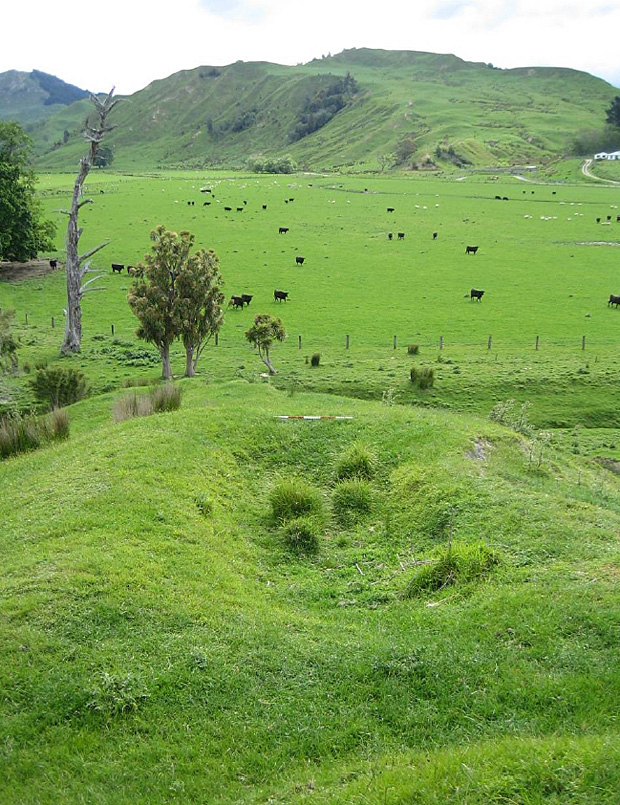
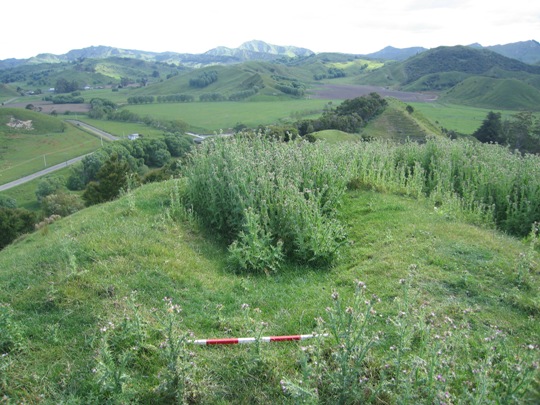
Pit and pit/ terrace sites are very common in Tolaga Bay, and demonstrate the importance of horticulture to Tolaga Bay's earliest inhabitants. The Bay's fertile soils and temperate climate were well suited to kumara gardening, and the pits were used for storing harvested kumara over the winter months. Rectangular storage pits (which were once roofed with a layer of earth), are more prevalent than the underground storage pits found elsewhere in New Zealand, a pattern attributed to the harder substrate of the soil in this area. They are in fact the most common archaeological site type in Tolaga Bay, and are found along the river banks and on the rolling hills to the south of the Bay. They are generally located in clusters on knolls or terraces, or on ridge crests, in lines from end to end, as found with this site -Y17/128.
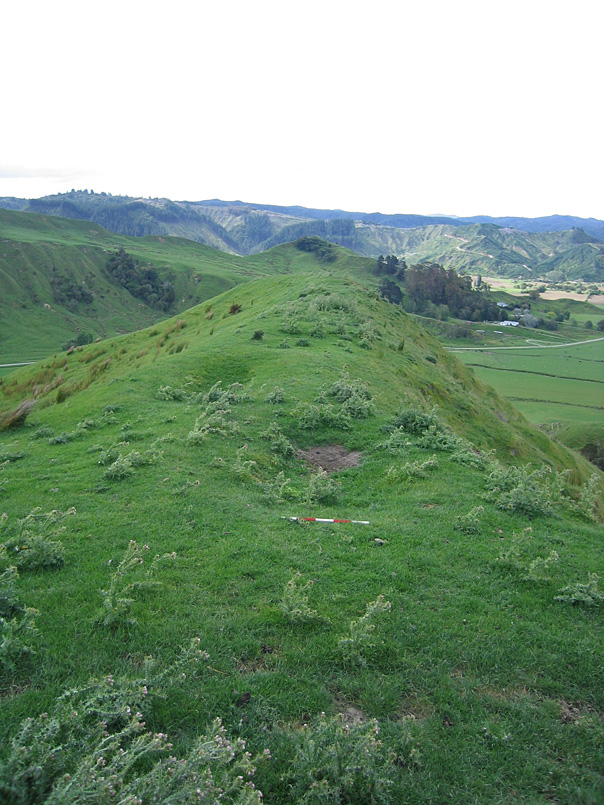
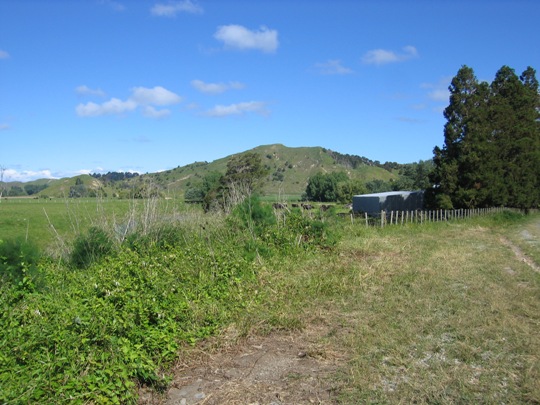
Pit site Y17/128 is located just north of the high point in the ridgeline that leads north of the Pukeatua trig, and is currently under pasture. It is approximately 700 metres east of Mangaheia Road. There are a number of other recorded archaeological sites (mostly pits and pit/ terraces) in the vicinity, particularly on the major ridgeline with Pukeatua trig at its peak.
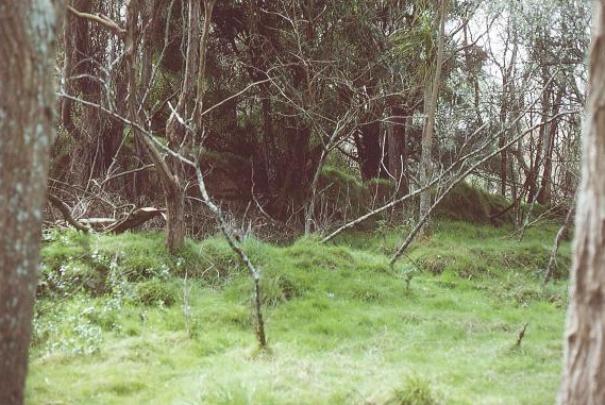
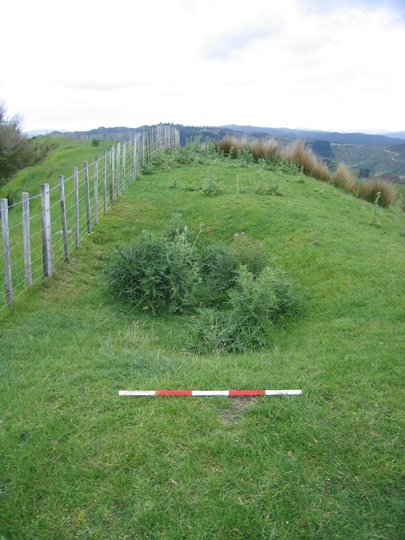
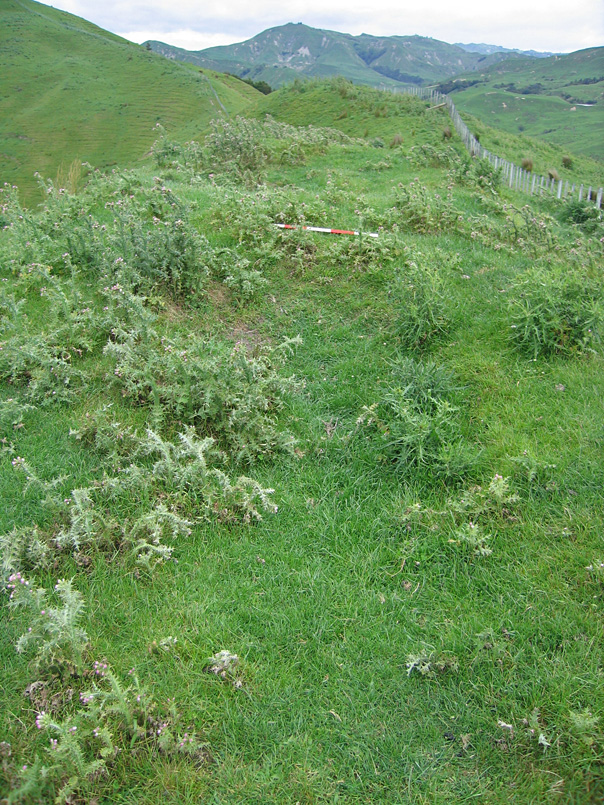
This site was first recorded by archaeologist Kevin Jones during his archaeological survey work in the Whangara, Tolaga Bay and Uawa Catchment areas in 1982-1983. This survey work was undertaken to gain information about the nature of prehistoric settlement in this locality, and also to evaluate specific sites for registration under the Historic Places Act 1980. Jones undertook a 'hurried' visit to the site in the rain, and recorded a total of five pits along the ridge top; the southern three pits were clearly visible, but the northern two pits were described as 'faint'. The three southern pits measured approximately 4 metres x 2 metres x 1 metre (depth).
Archaeologist Vanessa Tanner revisited the recorded archaeological sites on Iwinui Station in 2000 as part of the New Zealand Archaeological Association Site Recording Scheme Upgrade Project. The completed Site Record Form for Y17/128 actually seems to illustrate the northern part of pit site Y17/127 however, and it appears that part of Y17/128 may possibly have been re-recorded and assigned a new site record number - Y17/510.
The New Zealand Historic Places Trust undertook a site visit to Y17/128 in November 2007 and no major changes were noted. The ridgeline was not fenced and the site appeared as originally recorded, with three distinct pits at the southern end, and three faint pits to the north.
Y17/128 is one of numerous pit and pit/terrace sites recorded in the Tolaga Bay area. It is part of a dense archaeological and cultural landscape that is of considerable significance to Te Aitanga a Hauiti, reflecting the intensive Maori occupation and settlement of the Tolaga Bay area since the 14th - 15th centuries AD, and the important role that horticulture played in this.
Pit sites and the many other recorded archaeological sites including pa, midden, gardens and urupa reflect the intensive Maori occupation of the Tolaga Bay from the time of initial Polynesian settlement approximately 700 years ago. Access to abundant food resources from the sea, rivers, inland forests and horticultural production (kumara) meant that a large population could be sustained. It has been estimated that the early Maori population of Tolaga Bay totalled approximately 1200; and the main iwi was Te Aitanga a Hauiti.
Pit and pit/ terrace sites are very common in Tolaga Bay, and demonstrate the importance of horticulture to Tolaga Bay's earliest inhabitants. The Bay's fertile soils and temperate climate were well suited to kumara gardening, and the pits were used for storing harvested kumara over the winter months. Rectangular storage pits (which were once roofed with a layer of earth), are more prevalent than the underground storage pits found elsewhere in New Zealand, a pattern attributed to the harder substrate of the soil in this area. They are in fact the most common archaeological site type in Tolaga Bay, and are found along the river banks and on the rolling hills to the south of the Bay. They are generally located in clusters on knolls or terraces, or on ridge crests, in lines from end to end, as found with this site -Y17/128.
Pit site Y17/128 is located just north of the high point in the ridgeline that leads north of the Pukeatua trig, and is currently under pasture. It is approximately 700 metres east of Mangaheia Road. There are a number of other recorded archaeological sites (mostly pits and pit/ terraces) in the vicinity, particularly on the major ridgeline with Pukeatua trig at its peak.
This site was first recorded by archaeologist Kevin Jones during his archaeological survey work in the Whangara, Tolaga Bay and Uawa Catchment areas in 1982-1983. This survey work was undertaken to gain information about the nature of prehistoric settlement in this locality, and also to evaluate specific sites for registration under the Historic Places Act 1980. Jones undertook a 'hurried' visit to the site in the rain, and recorded a total of five pits along the ridge top; the southern three pits were clearly visible, but the northern two pits were described as 'faint'. The three southern pits measured approximately 4 metres x 2 metres x 1 metre (depth).
Archaeologist Vanessa Tanner revisited the recorded archaeological sites on Iwinui Station in 2000 as part of the New Zealand Archaeological Association Site Recording Scheme Upgrade Project. The completed Site Record Form for Y17/128 actually seems to illustrate the northern part of pit site Y17/127 however, and it appears that part of Y17/128 may possibly have been re-recorded and assigned a new site record number - Y17/510.
The New Zealand Historic Places Trust undertook a site visit to Y17/128 in November 2007 and no major changes were noted. The ridgeline was not fenced and the site appeared as originally recorded, with three distinct pits at the southern end, and three faint pits to the north.
Y17/128 is one of numerous pit and pit/terrace sites recorded in the Tolaga Bay area. It is part of a dense archaeological and cultural landscape that is of considerable significance to Te Aitanga a Hauiti, reflecting the intensive Maori occupation and settlement of the Tolaga Bay area since the 14th - 15th centuries AD, and the important role that horticulture played in this.