The Union Fish Company Building is a former office and workshop associated with the development of motorised transport in twentieth-century Auckland, especially cars and shipping. A two-storey brick structure of ornate design, the building was one of a number of light industrial structures located beside the main shipping wharves during the early 1900s. The structure was erected in 1905-1906 for the engineering firm of W. A. Ryan & Company, who imported motor cars from overseas. The company had been formed in 1894, when it was considered to be at the forefront of engineering technology in New Zealand. The firm maintained this reputation with the early importation of cars, which were luxury items requiring specialised mechanical support. The earliest such vehicles had been imported to Auckland in 1900, with nearby Queen Street being the earliest asphalted road in the city in 1902.
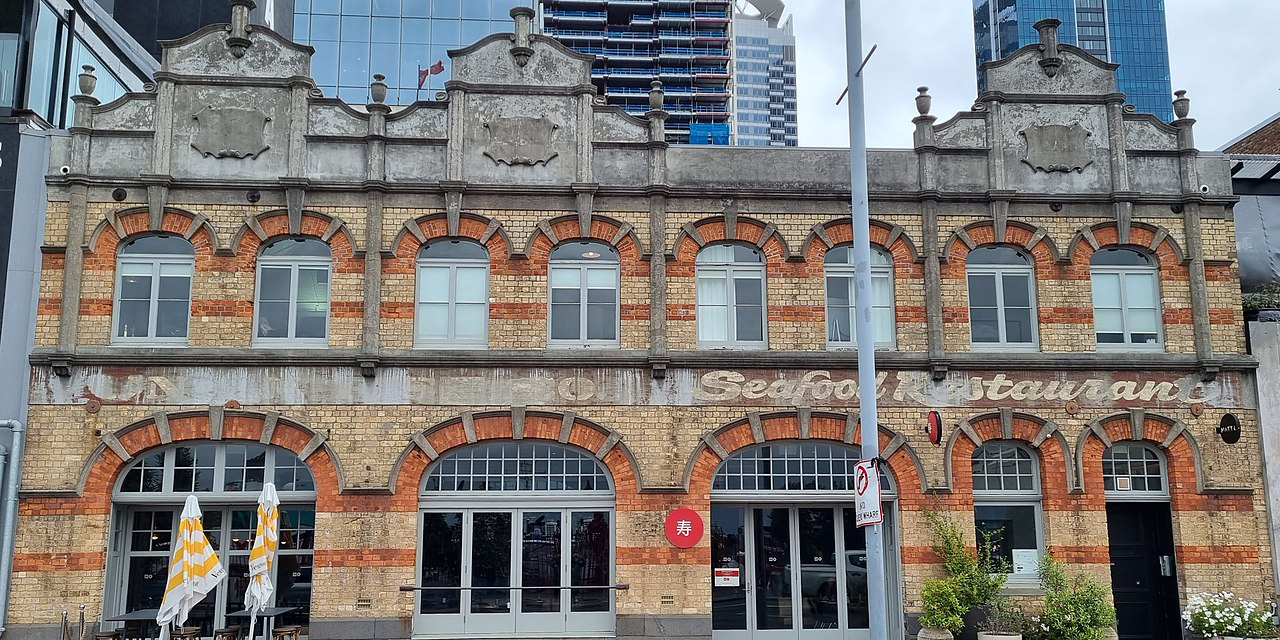
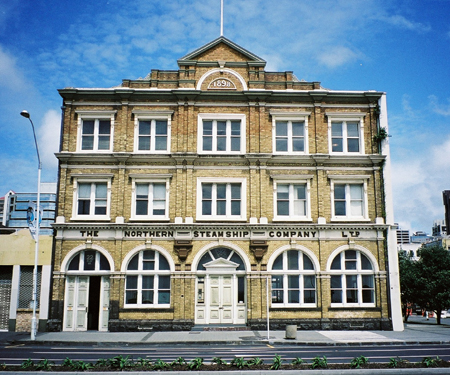
The Free Style architecture of the building included banded brickwork and a basecourse of stone, while prominent arched windows used alternating keystones and brick. Free Style was previously used in Britain as an attempt to fuse commercial and institutional buildings with the philosophy of the Arts and Crafts Movement, which emphasised the nobility of artisan labour. Its employment was unusual in Auckland, and in this instance may reflect the innovation and craftsmanship associated with early motor cars, and by extension the Ryan company. The original building was four bays long with large windows lighting the ground floor workshop inside. A vehicle entrance was located asymmetrically near one end of the structure, while offices were located above. After being gutted by fire in late 1906, the building was immediately refurbished and extended with two additional bays in an identical style. It was taken over by the United Repairing Company (URC) in 1912, when marine engineering became the major focus of activity. The URC was jointly owned by the Northern Steamship Company, whose headquarters were immediately next door to the workshop (see 'Northern Steamship Company Building'), and the Union Steamship Company, the largest private employer in the country. Demolition of the two-bay extension by 1962 can be linked to the decline in local shipping as the roading network improved. In the 1970s the original bays were converted into a bar and restaurant, latterly known as the 'Union Fish Company'. The building is an integral part of the Quay Street Historic Area, and survived plans for demolition in the 1980s.
The Union Fish Company Building is significant as possibly the oldest surviving structure in Auckland linked with the importation of cars, heralding important changes in road transport. It is connected with technological innovation in New Zealand, particularly through its association with W. A. Ryan and Company. The building reflects the importance of engineering in the early twentieth century as the combustion engine took over from horses, sailing ships and steam. It is one of the few engineering workshops to survive in central Auckland that dates from the very early 1900s. The building is a valuable reminder of the once substantial working-class involvement in dockside life, and the diversity of activity beside the wharves. It is particularly important for its connections with the adjacent Northern Steamship Company Building: together they provide a comparison of white- and blue-collar working environments. The building is significant for its association with New Zealand's role as a consumer of imported goods, and Auckland's function as a conduit for overseas trade. It has considerable value as one of a group of buildings along Quay Street that demonstrate Auckland's maritime and commercial past.
The Free Style architecture of the building included banded brickwork and a basecourse of stone, while prominent arched windows used alternating keystones and brick. Free Style was previously used in Britain as an attempt to fuse commercial and institutional buildings with the philosophy of the Arts and Crafts Movement, which emphasised the nobility of artisan labour. Its employment was unusual in Auckland, and in this instance may reflect the innovation and craftsmanship associated with early motor cars, and by extension the Ryan company. The original building was four bays long with large windows lighting the ground floor workshop inside. A vehicle entrance was located asymmetrically near one end of the structure, while offices were located above. After being gutted by fire in late 1906, the building was immediately refurbished and extended with two additional bays in an identical style. It was taken over by the United Repairing Company (URC) in 1912, when marine engineering became the major focus of activity. The URC was jointly owned by the Northern Steamship Company, whose headquarters were immediately next door to the workshop (see 'Northern Steamship Company Building'), and the Union Steamship Company, the largest private employer in the country. Demolition of the two-bay extension by 1962 can be linked to the decline in local shipping as the roading network improved. In the 1970s the original bays were converted into a bar and restaurant, latterly known as the 'Union Fish Company'. The building is an integral part of the Quay Street Historic Area, and survived plans for demolition in the 1980s.
The Union Fish Company Building is significant as possibly the oldest surviving structure in Auckland linked with the importation of cars, heralding important changes in road transport. It is connected with technological innovation in New Zealand, particularly through its association with W. A. Ryan and Company. The building reflects the importance of engineering in the early twentieth century as the combustion engine took over from horses, sailing ships and steam. It is one of the few engineering workshops to survive in central Auckland that dates from the very early 1900s. The building is a valuable reminder of the once substantial working-class involvement in dockside life, and the diversity of activity beside the wharves. It is particularly important for its connections with the adjacent Northern Steamship Company Building: together they provide a comparison of white- and blue-collar working environments. The building is significant for its association with New Zealand's role as a consumer of imported goods, and Auckland's function as a conduit for overseas trade. It has considerable value as one of a group of buildings along Quay Street that demonstrate Auckland's maritime and commercial past.