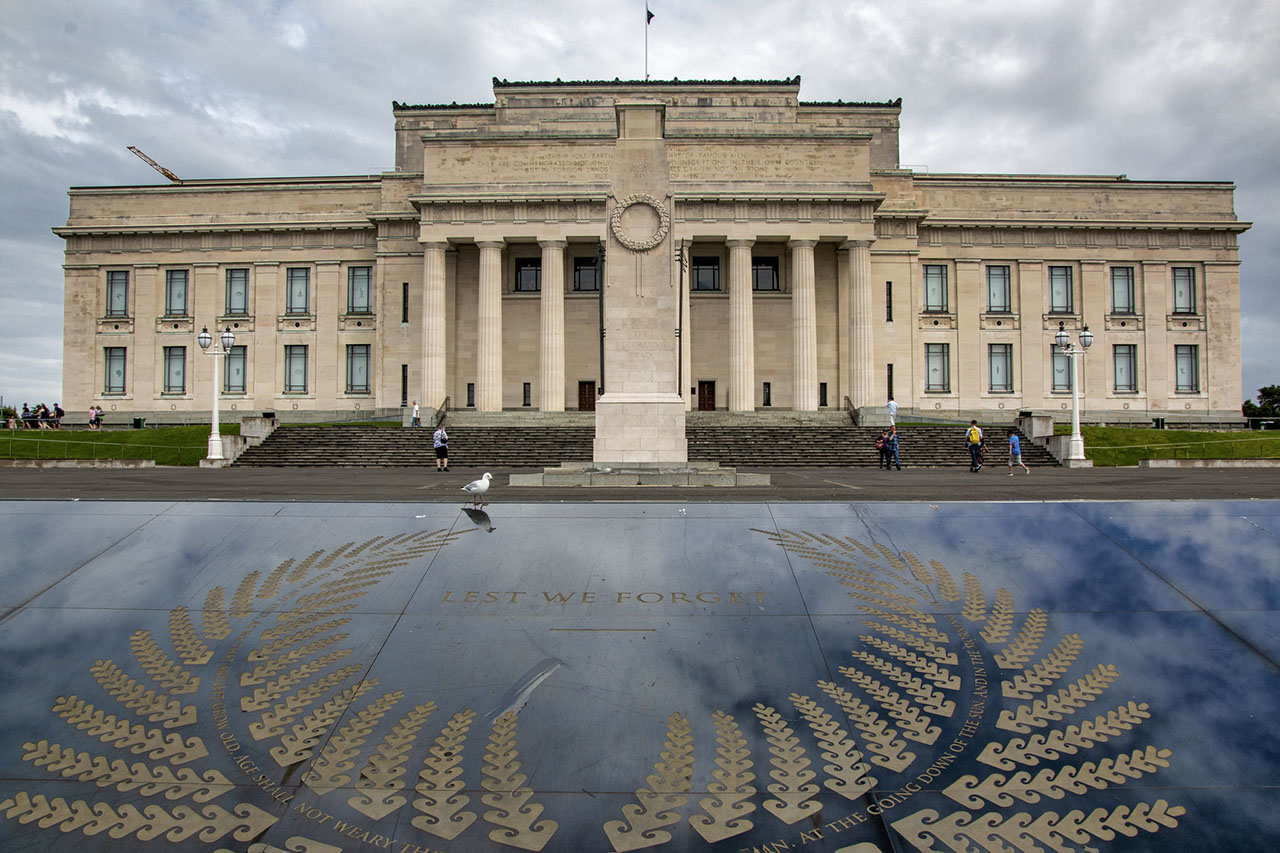
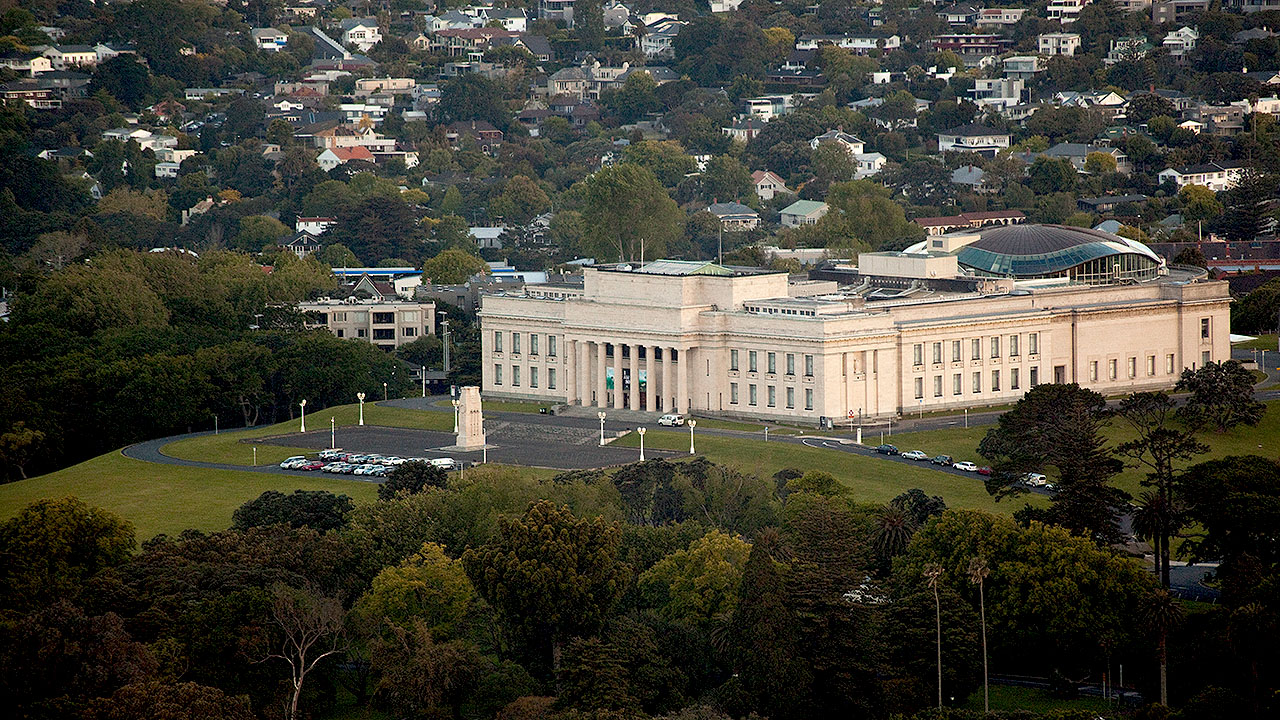
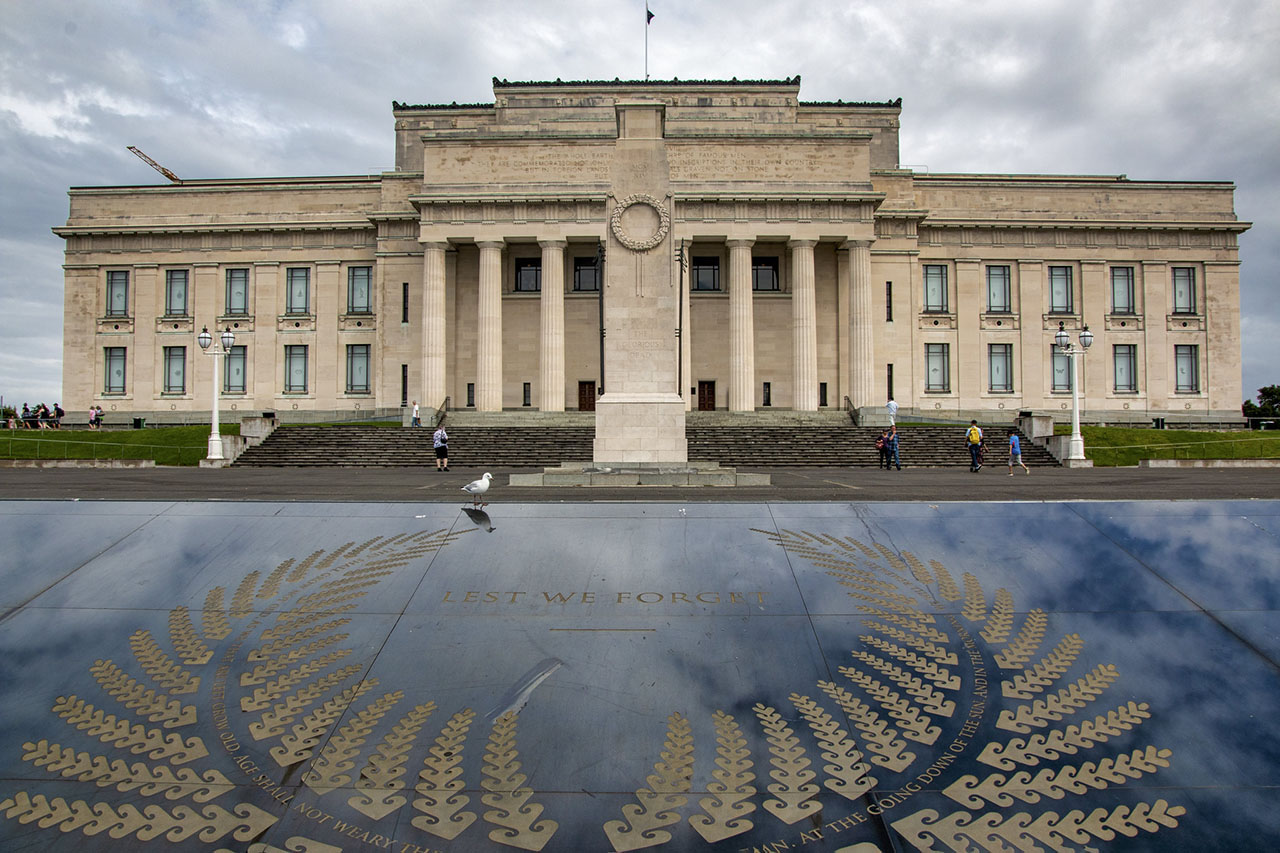
The Auckland War Memorial Museum is one of the largest neoclassical buildings in Australasia. It stands as a prominent memorial to the many Aucklanders and other northern New Zealanders who fell in two world wars, exhibiting a strong New Zealand identity through its architecture and function. Constructed on a site of significance to Maori, previously known as Pukekawa, it overlooks the city centre from the Auckland Domain, a major city park. The building was initially erected in 1924-1929 through government and public subscription, as a monument of practical benefit to communities affected by war. It commemorated those from Auckland Province who died in the First World War, as well as providing a suitable home for the Auckland Institute and Museum. The museum had been founded in 1852 and had occupied a succession of buildings, including much smaller premises in Princes Street.
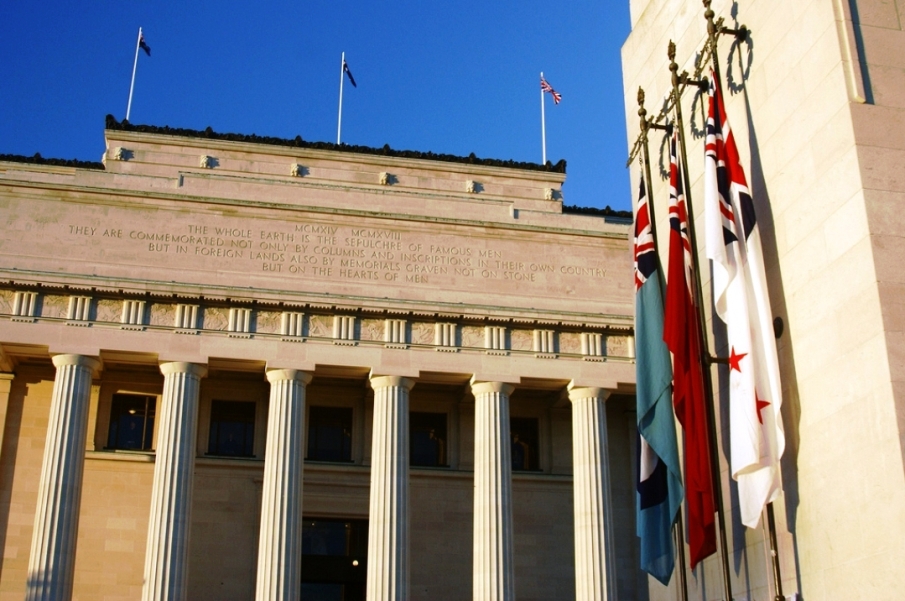
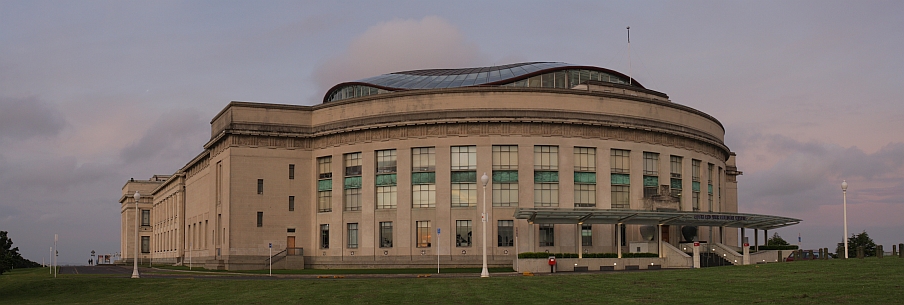
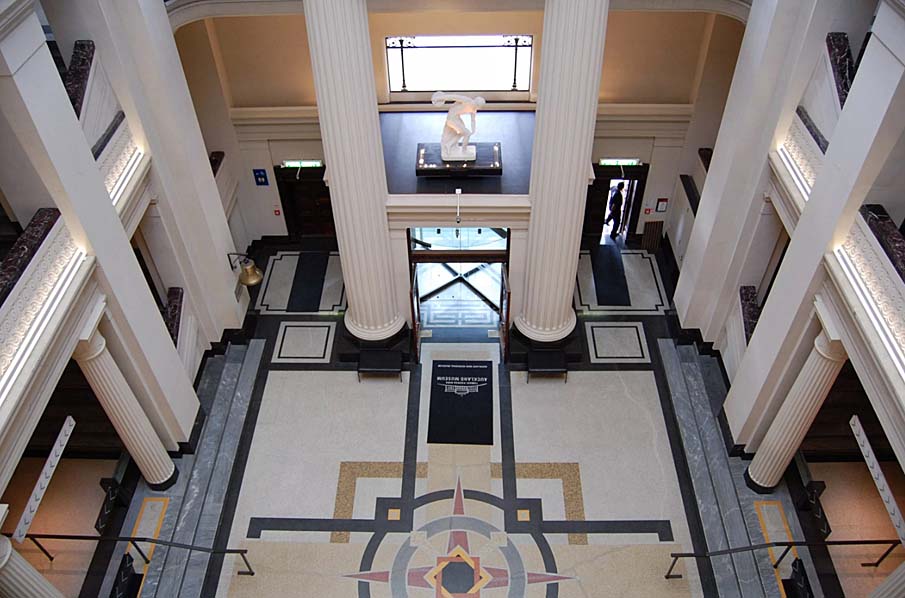
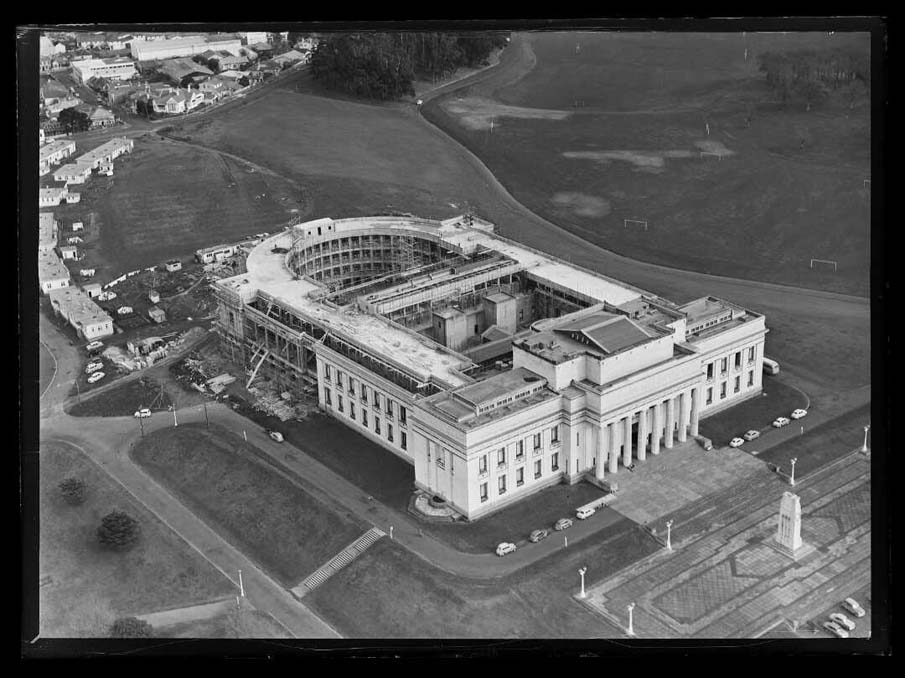
The earliest part of the Portland stone and reinforced concrete building was constructed in a classical Greek Revival style, inspired by similar public buildings in Britain and the USA, and the heroic associations of classical Greece. Its Auckland-based architects - Grierson, Aimer and Draffin - had all served in the First World War and were appointed after winning an international competition. The building contains numerous references to the Great War, including friezes and the names of battles on its exterior. Its interior evokes a strong sense of national pride through the use of Maori and native botanical motifs. National identity was also promoted through the prominence given to Maori artifacts in the main exhibition hall. The structure was recognised at the time of its construction, being awarded a gold medal by the New Zealand Institute of Architects in 1929. The building retained its symbolism when a large extension was added to the rear in 1956-1960. This commemorates those from the province who died in the Second World War and, involving Keith Draffin, is similar in style to the original building. A more recent memorial inside the building remembers combatants from all over New Zealand who fell in Malaya, Korea and Vietnam.
The Auckland War Memorial Museum has national and international significance as a major monument to the fallen in two world wars. It has important spiritual connections as a memorial to the many northern New Zealanders - both Maori and Pakeha - who have died in conflict. The building enjoys high public esteem and is important for attesting the strength of national sentiment after both world wars. It is considered to be one of the most successfully designed Greek Revival buildings in Australasia, demonstrating an important fusion of overseas and New Zealand-inspired architectural styles. The structure is a valuable statement of New Zealand identity, extending to its association with the largest collection of Maori and Polynesian artifacts in the country. It is an important part of the city skyline, and is of considerable value for its links to other places associated with war and peace, such as the cenotaph, the adjacent pa of Pukekaroa, where a peace-making ceremony was held between Tainui and Ngapuhi in 1828, and the Maori battle site of Toki Whatinui. It is also a centrepiece of the Auckland Domain, attesting to the educational and commemorative role of the twentieth-century park.
The earliest part of the Portland stone and reinforced concrete building was constructed in a classical Greek Revival style, inspired by similar public buildings in Britain and the USA, and the heroic associations of classical Greece. Its Auckland-based architects - Grierson, Aimer and Draffin - had all served in the First World War and were appointed after winning an international competition. The building contains numerous references to the Great War, including friezes and the names of battles on its exterior. Its interior evokes a strong sense of national pride through the use of Maori and native botanical motifs. National identity was also promoted through the prominence given to Maori artifacts in the main exhibition hall. The structure was recognised at the time of its construction, being awarded a gold medal by the New Zealand Institute of Architects in 1929. The building retained its symbolism when a large extension was added to the rear in 1956-1960. This commemorates those from the province who died in the Second World War and, involving Keith Draffin, is similar in style to the original building. A more recent memorial inside the building remembers combatants from all over New Zealand who fell in Malaya, Korea and Vietnam.
The Auckland War Memorial Museum has national and international significance as a major monument to the fallen in two world wars. It has important spiritual connections as a memorial to the many northern New Zealanders - both Maori and Pakeha - who have died in conflict. The building enjoys high public esteem and is important for attesting the strength of national sentiment after both world wars. It is considered to be one of the most successfully designed Greek Revival buildings in Australasia, demonstrating an important fusion of overseas and New Zealand-inspired architectural styles. The structure is a valuable statement of New Zealand identity, extending to its association with the largest collection of Maori and Polynesian artifacts in the country. It is an important part of the city skyline, and is of considerable value for its links to other places associated with war and peace, such as the cenotaph, the adjacent pa of Pukekaroa, where a peace-making ceremony was held between Tainui and Ngapuhi in 1828, and the Maori battle site of Toki Whatinui. It is also a centrepiece of the Auckland Domain, attesting to the educational and commemorative role of the twentieth-century park.