DonateMembershipVisit Heritage
  • Tūrangawaewae
    Places
  • Tira Māori
    Māori Heritage
  • Poutairangahia
    Archaeology
  • Rauemi
    Resources
  • Mō Tātou
    About Us
  • New Zealand Heritage List
  • Nominate and submit
  • Explore the List
  • National Historic Landmarks
  • Plaques
  • Rainbow List Project
  • Lost heritage
  • Visit Heritage
  • Our properties
  • Turnbull House Project
  • Collections
  • Shop
  • Tohu Whenua
  • Tira Māori
  • Conserving Māori heritage
  • Marae built heritage
  • Māori heritage on the List
  • Hinemihi—Te Hokinga Mai
  • What is archaeology?
  • Is there a site on my property?
  • What are my legal requirements?
  • Affecting an archaeological site
  • Declaring an archaeological site
  • Archaeology FAQs
  • Archaeology Digital Library
  • Archaeology guidelines and templates
  • Resources
  • Funding
  • Publications
  • Sustainable management guides
  • Disaster recovery
  • Podcasts & digital resources
  • Education Hub
  • Conservation plans
  • About
  • Board
  • Māori Heritage Council
  • Senior Staff
  • Offices
  • Contact us
  • Careers
  • Covenants
  • Fast-track
  • Corporate documents
  • Currently consulting on
  • Our submissions
  • News
  • Covid-19 response
Quick links
Rārangi Kōrero | The List
Explore the List
National Historic Landmarks
Ngā Manawhenua o Aotearoa me ōna Kōrero Tūturu
Quick links
Tapuwae
A Vision for Places of Māori Heritage
Funding for Māori Heritage
Resources
Quick links
Archaeological Authority Portal
Applying for an archaeological authority
Archaeology FAQs
Browse the most frequently asked questions about archaeological authorities and the archaeological process.
Quick links
Quick links
News
News Keep up to date with Heritage New Zealand Pouhere Taonga
Membership
Membership Find out more and sign up today
DonateMembershipVisit Heritage
  • Tūrangawaewae
    Places
  • Tira Māori
    Māori Heritage
  • Poutairangahia
    Archaeology
  • Rauemi
    Resources
  • Mō Tātou
    About Us
  • New Zealand Heritage List
  • Nominate and submit
  • Explore the List
  • National Historic Landmarks
  • Plaques
  • Rainbow List Project
  • Lost heritage
  • Visit Heritage
  • Our properties
  • Turnbull House Project
  • Collections
  • Shop
  • Tohu Whenua
  • Tira Māori
  • Conserving Māori heritage
  • Marae built heritage
  • Māori heritage on the List
  • Hinemihi—Te Hokinga Mai
  • What is archaeology?
  • Is there a site on my property?
  • What are my legal requirements?
  • Affecting an archaeological site
  • Declaring an archaeological site
  • Archaeology FAQs
  • Archaeology Digital Library
  • Archaeology guidelines and templates
  • Resources
  • Funding
  • Publications
  • Sustainable management guides
  • Disaster recovery
  • Podcasts & digital resources
  • Education Hub
  • Conservation plans
  • About
  • Board
  • Māori Heritage Council
  • Senior Staff
  • Offices
  • Contact us
  • Careers
  • Covenants
  • Fast-track
  • Corporate documents
  • Currently consulting on
  • Our submissions
  • News
  • Covid-19 response
Quick links
Rārangi Kōrero | The List
Explore the List
National Historic Landmarks
Ngā Manawhenua o Aotearoa me ōna Kōrero Tūturu
Quick links
Tapuwae
A Vision for Places of Māori Heritage
Funding for Māori Heritage
Resources
Quick links
Archaeological Authority Portal
Applying for an archaeological authority
Archaeology FAQs
Browse the most frequently asked questions about archaeological authorities and the archaeological process.
Quick links
Quick links
News
News Keep up to date with Heritage New Zealand Pouhere Taonga
Membership
Membership Find out more and sign up today
  • Places
  • Nominate and submit
  • National Historic Landmarks
  • Places
  • Nominate and submit
  • National Historic Landmarks
  • Tira Māori
  • Conserving Māori heritage
  • Marae built heritage
  • Tira Māori
  • Conserving Māori heritage
  • Marae built heritage
  • Archaeological authorities
  • Archaeology Digital Library
  • Archaeological authorities
  • Archaeology Digital Library
  • All resources
  • Publications
  • Funding
  • All resources
  • Publications
  • Funding
  • FAQs
  • FAQs
Follow us on:
Places
  • Places
  • Nominate and submit
  • National Historic Landmarks
Tira Māori
  • Tira Māori
  • Conserving Māori heritage
  • Marae built heritage
Archaeology
  • Archaeological authorities
  • Archaeology Digital Library
Resources
  • All resources
  • Publications
  • Funding
FAQs
  • FAQs
Follow us on
HomePrivacyTerms and conditionsAbout this site
© Heritage New Zealand Pouhere Taonga 2026.
 
Parliamentary Library

New Zealand Parliament Grounds, 1 Molesworth Street and 1 Museum Street, Pipitea, WELLINGTON

Public

Historic Place Category 1

List No. 217
Quick links:
List GalleryLocationDetails
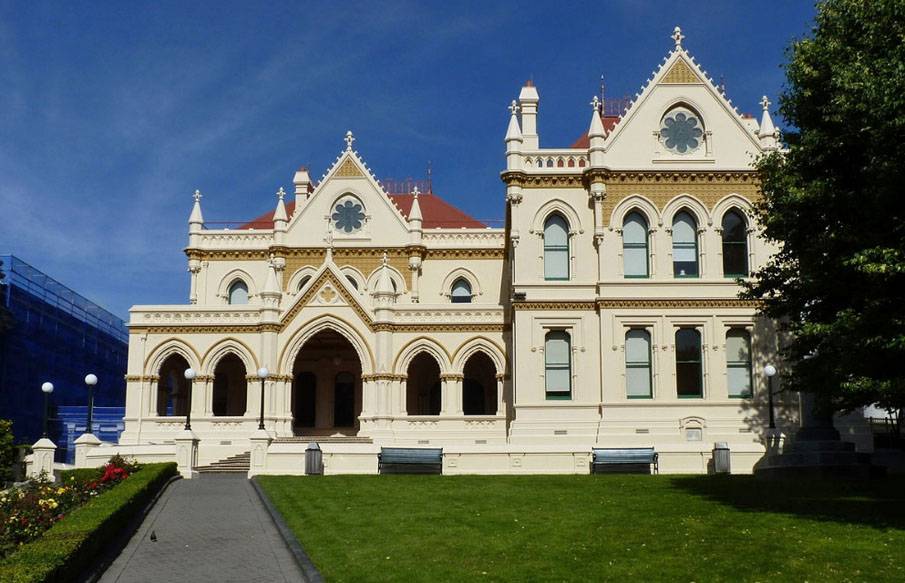
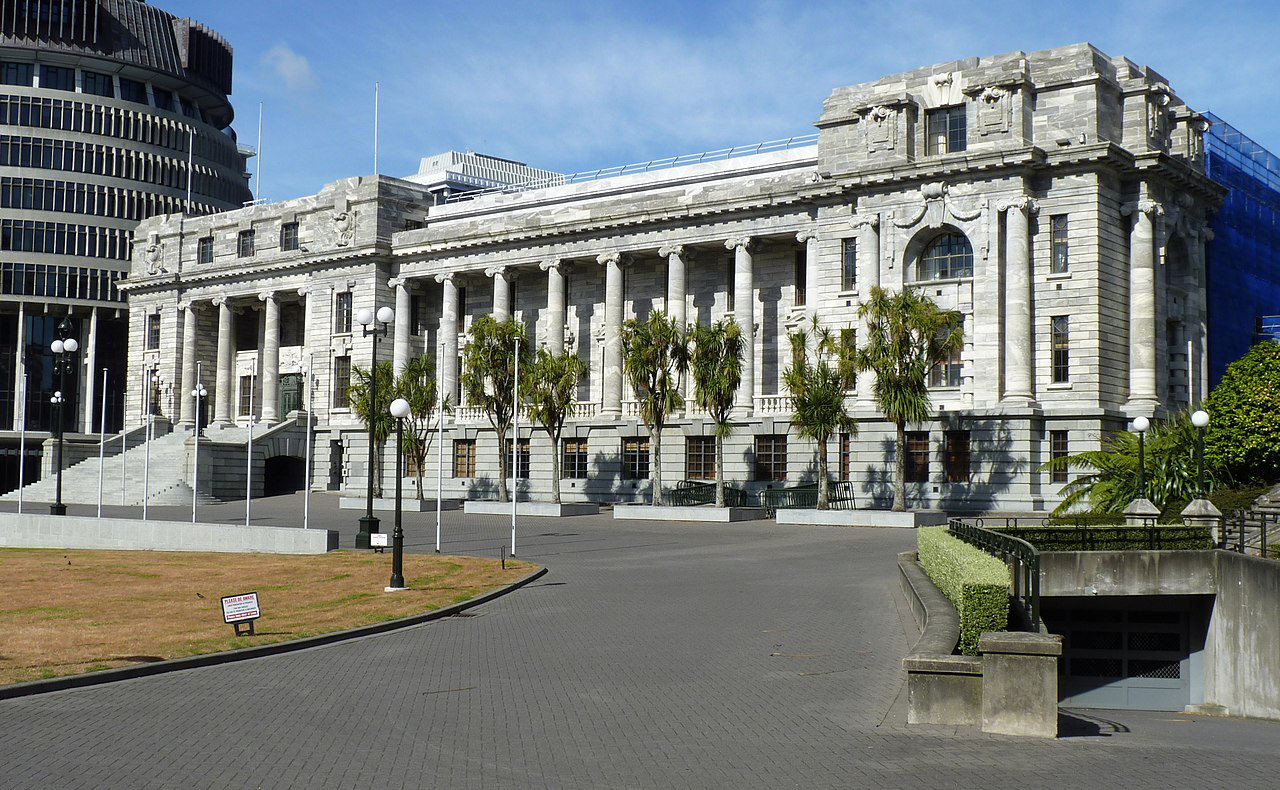
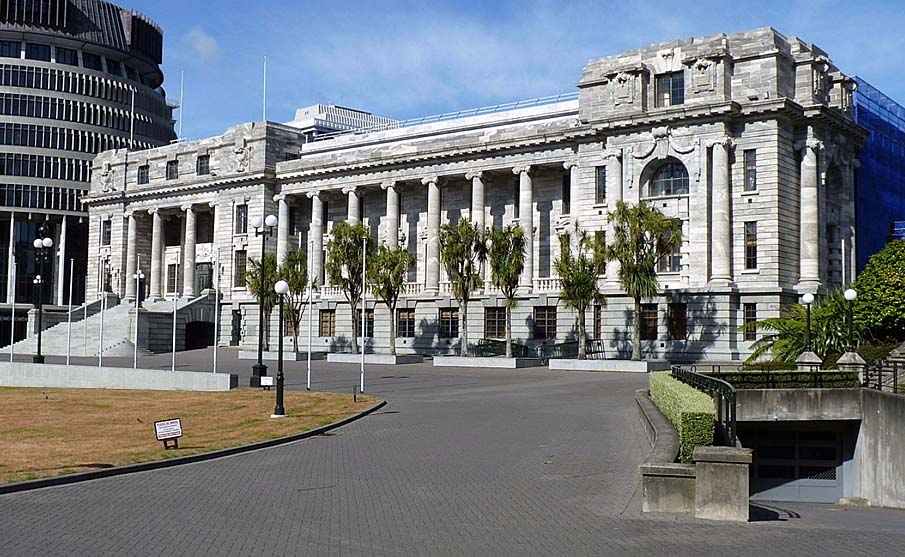
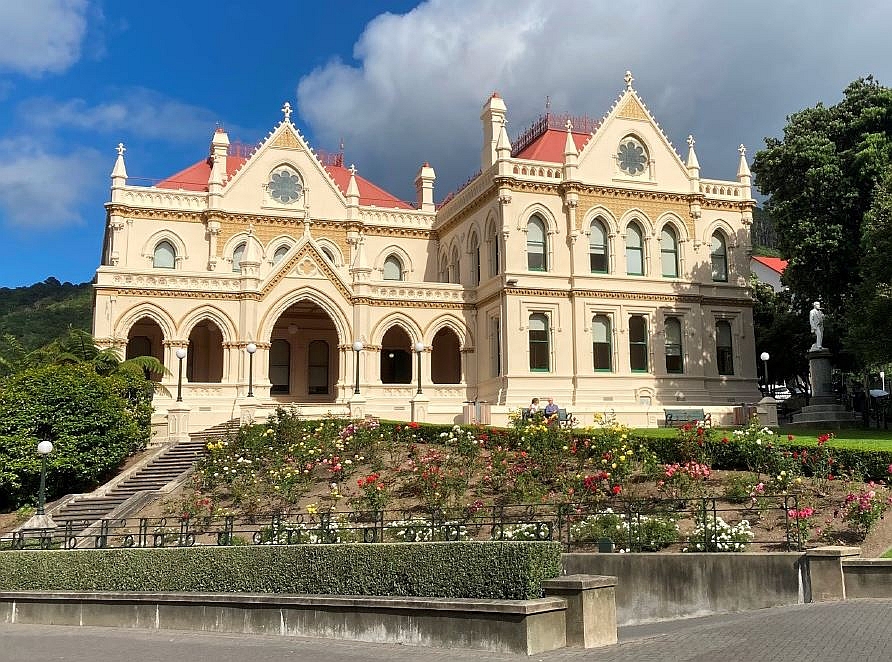
The General Assembly Library, now known as the Parliamentary Library, was designed by Thomas Turnbull (1824-1907). Started in 1897, and completed in 1899, it stands on the former site of Wellington's Provincial Government Building. The architectural quality of the Parliamentary Library building, its internal spaces, light and quality of fittings all mean that the building is one of New Zealand's architectural treasures. With the neighbouring Parliament House (built in 1912-22), Beehive, and the wooden Government Building (1871) it has been the site of many important events of New Zealand's history.
The land on which the Parliamentary Library sits has long been occupied by Māori. Before 1820 Ngāti Ira and related peoples known as ‘Whatonga-descent peoples’ occupied Te Whanganui a Tara. Successive migrant groups displaced them and by 1840 those with customary rights to Wellington Harbour and its foreshore were Te Ᾱtiawa, Taranaki, Ngāti Ruanui, Ngāti Tama and Ngāti Toa. There was an established Māori settlement at the nearby Pipitea Pā and two streams known as Waipiro and Tutaenui ran through the vicinity. Parliamentary Library sits on land previously known as ‘Kaiota’ and it is believed that there are urupā in the locality. This land was part of the original town of Wellington, New Zealand’s capital from 1865.

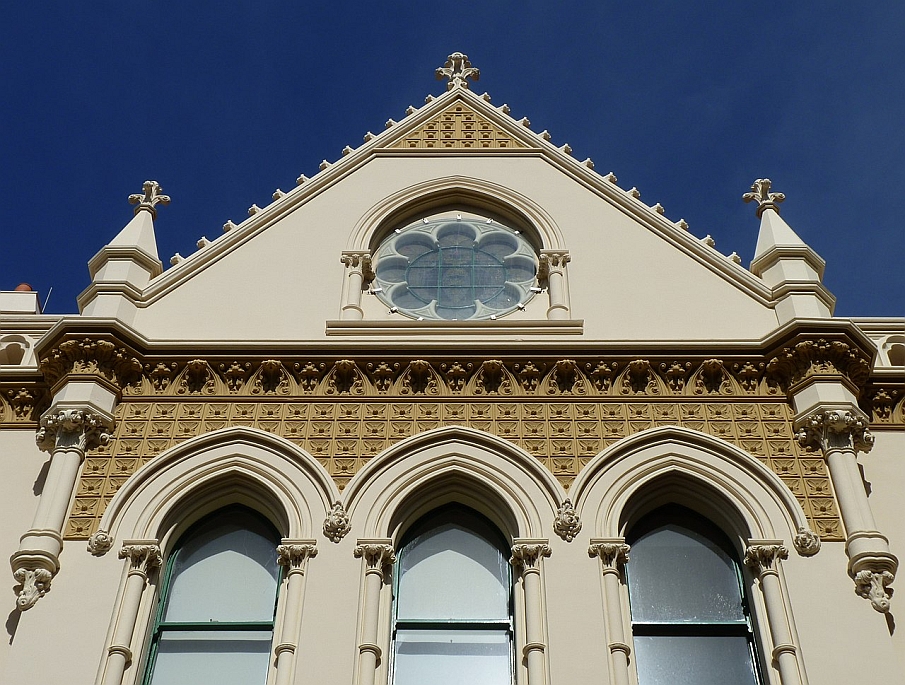
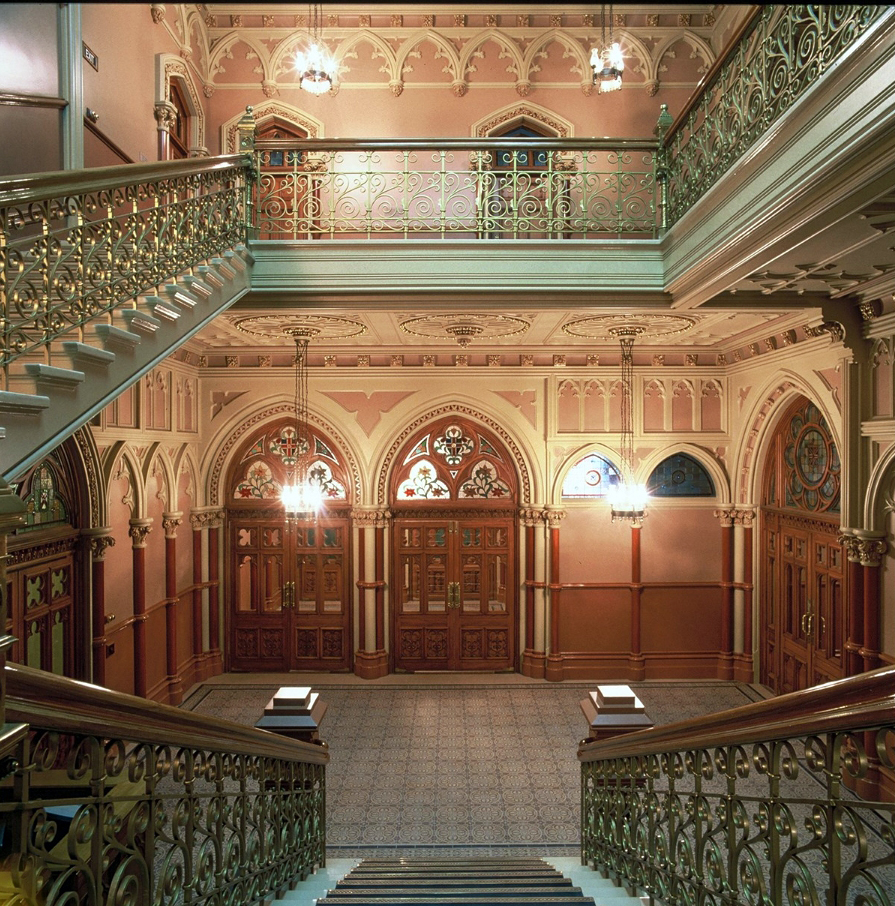
Turnbull was a pioneer in designing buildings that could withstand earthquakes and fires. His original design for the library had three stories with a single-storey portico and a prominent wing. This balanced a wing of the timber Parliament House. The Free Gothic style library has been described as ‘one of the most complete and impressive examples from the late Victorian period still surviving in New Zealand’. The striking asymmetric elevation has two hipped roofs and Venetian influenced detailing. The library is considered to be one of Turnbull’s most important designs and inside and out the building has fittings of exceptional quality.

Parliament halted construction with only two of the three intended floors built, to reduce costs. Concerned that the library would be dwarfed by the neighbouring building, Turnbull resigned from the project in protest. At his request, the foundation stone, which had been laid in 1898, was altered so that his name was not visible. The job of ensuring that the work was completed fell to John Campbell (1857-1942), the Government Architect. He redesigned the parapet, gable and roof of the building, and many of the intended decorative features were removed from the design. A system of firewalls and doors were built within the building and between the old wooden parliament building and the new building; as a result, the library survived the fire that completely destroyed the timber portions of the Parliament building in 1907.

Parliamentary Library has been the site of many important events. In 1901 the portico was draped in black cloth as crowds gathered to mark the death of Queen Victoria; in 1907 the governor announced that New Zealand had become a Dominion from its steps. The leader of the opposition had offices in the building for many years until the Beehive was completed in the 1980s, at which time the library expanded to occupy the entire building. As a result of concerns about earthquake safety, a major refurbishment of the library and Parliament House was undertaken in the 1990s. In 1992, while this work was progressing, the building was significantly damaged by fire, destroying some of the fixtures that the restoration was attempting to preserve. Also during this work, four gables that had been removed in the 1950s for earthquake reasons were re-built and the original rose windows were replicated. The building continues to house Parliament's library.
Parliamentary Library, Wellington | Kerryn Pollock | 20/01/2021 | Heritage New Zealand
Parliamentary Library, Wellington. Building detail CC BY-SA 4.0 Image courtesy of commons.wikimedia.org | Michal Klajban | 01/01/2015 | Michal Klajban - Wikimedia Commons
Parliamentary Library, Wellington. CC BY-SA 4.0 Image courtesy of commons.wikimedia.org | Michal Klajban | 01/01/2015 | Michal Klajban - Wikimedia Commons
Parliamentary Library, Wellington. 2015 CC BY-SA 4.0 Stairs and foyer of New Zealand Parliament Library | Paul McCredie | Parliamentary Service
Parliamentary Library, Wellington | Kerryn Pollock | 20/01/2021 | Heritage New Zealand
Parliamentary Library, Wellington. Building detail CC BY-SA 4.0 Image courtesy of commons.wikimedia.org | Michal Klajban | 01/01/2015 | Michal Klajban - Wikimedia Commons
Parliamentary Library, Wellington. CC BY-SA 4.0 Image courtesy of commons.wikimedia.org | Michal Klajban | 01/01/2015 | Michal Klajban - Wikimedia Commons
Parliamentary Library, Wellington. 2015 CC BY-SA 4.0 Stairs and foyer of New Zealand Parliament Library | Paul McCredie | Parliamentary Service

List Entry Information

Overview

Status
Listed

List Entry Status
Historic Place Category 1

Access
Able to Visit

List Number
217

Date Entered
20th July 1989

Date of Effect
20th July 1989

City/District Council
Wellington City

Region
Wellington Region

Extent of List Entry

Extent includes part of the land described as Sec 1 SO 38114 (RT 10240), Wellington Land District and the building known as the Parliamentary Library thereon. Refer to the extent map tabled at the Heritage New Zealand Board meeting on 3 September 2015.

Legal description

Sec 1 SO 38114 (RT 10240), Wellington Land District

Detailed List Entry

Construction Professional

Name

Turnbull, Thomas

Type

Architect

Biography

Thomas Turnbull (1824-1907) was born and educated in Scotland and trained under David Bryce, Her Majesty's Architect. He travelled to Melbourne in 1851 and after nine years there moved to San Francisco. He arrived in New Zealand in 1871 and soon established a thriving business. His son William, a distinguished architect in his own right, became a partner in the firm in 1891. Turnbull was a member of the Royal Institute of British Architects. He was a pioneer in the design of buildings to withstand earthquakes and he was responsible for breaking down prejudice against the use of permanent materials for building construction. He specialised in masonry construction for commercial purposes but was also responsible for some fine houses. Among his most important buildings were the Willis Street churches of St Peter (1879) and St John (1885), the former National Mutual Building (1883-84), the General Assembly Library (1899) and the former Bank of New Zealand Head Office (1901), all in Wellington.

Name

Campbell, John

Type

Architect

Biography

John Campbell (1857-1942) served his articles under John Gordon (c1835-1912) in Glasgow. He arrived in Dunedin in 1882 and after a brief period as a draughtsman with Mason and Wales joined the Dunedin branch of the Public Works Department in 1883. His first known work, an unbuilt design for the Dunedin Railway Station, reveals an early interest in Baroque architecture. In November 1888 Campbell was transferred to Wellington where in 1889 he took up the position of draughtsman in charge of the Public Buildings Division of the Public Works Department. He remained in charge of the design of government buildings throughout New Zealand until his retirement in 1922, becoming in 1909 the first person to hold the position of Government Architect. Government architecture designed under his aegis evidences a change in style from Queen Anne to Edwardian Baroque. His best-known Queen Anne design is the Dunedin Police Station (1895-8), modelled on Richard Norman Shaw's New Scotland Yard (1887-90). Among his most exuberant Edwardian Baroque buildings is the Public Trust Office, Wellington (1905-09). Although Campbell designed the Dunedin Law Courts (1899-1902) in the Gothic style with a Scottish Baronial inflection, he established Edwardian Baroque as the government style for police stations, courthouses and post offices throughout New Zealand. In 1911 Campbell won the nation-wide architectural competition for the design of Parliament Buildings, Wellington. Although only partially completed, Parliament House is the crowning achievement of Campbell's career.

Construction Details

Start Year

1897

Finish Year

1899

Type

Original Construction

Start Year

1991

Finish Year

1996

Type

Modification

Description

Major renovations and strengthening (base isolators)

Start Year

1907

Type

Damaged

Description

Fire destroys part of the roof and the adjoining building

Start Year

1942

Type

Damaged

Description

Earthquake destroys several gable ends

Start Year

1953

Type

Partial Demolition

Description

More gables removed after earthquake scare

Reference

Completion Date

19th February 2021

Report Written By

Miranda Williamson and Elizabeth Cox

Information Sources

Cochran, 1989 (2)

Chris Cochran and Rod Cook, Parliamentary Library, Parliament House: Conservation Values, April 1989

Cook, 1988

Rod Cook, Parliament: The Land and Buildings from 1840, Wellington 1988

Parliamentary Service Commission, 1996

Parliamentary Service Commission, To House Parliament: The Construction, Strengthening and Refurbishment of Parliament Buildings, Wellington, New Zealand, Wellington 1996

Porter, 1979

Frances Porter (ed.), Historic Buildings of New Zealand: North Island, Auckland, 1979

Progress: News

Progress: News from the Parliament Buildings Strengthening & Refurbishment Project

Bowman, I, J Martin and Boffa Miskell Limited 2018

Parliamentary Library: Conservation Plan, Wellington: Parliamentary Service, 2018.

Report Written By

This place was identified as significant under previous legislation with different information requirements. It remains significant under the current legislation. There is opportunity under our legislation and policies to add to this information. Further information about this place may be available from the Central Regional Office of Heritage New Zealand Pouhere Taonga. A fully referenced upgrade report is available on request from the Central Regional Office of Heritage New Zealand’ Please note that entry on the New Zealand Heritage List/Rarangi Korero identifies only the heritage values of the property concerned, and should not be construed as advice on the state of the property, or as a comment of its soundness or safety, including in regard to earthquake risk, safety in the event of fire, or insanitary conditions.

Further Information

Current Usages

Uses: Civic Facilities

Specific Usage: Library

Former Usages

General Usage:: Civic Facilities

Specific Usage: Library

General Usage:: Government

Specific Usage: Government office building

Themes

Web Links

description: Describes the strengthening work undertaken in 1992-95

url: http://www.parliament.nz/en-NZ/AboutParl/HowPWorks/FactSheets/f/3/8/00PlibFactsheetBuildings1-The-earth-may-move-but-Parliament-stays.htm

description: History of Parliament buildings and grounds

url: http://www.parliament.nz/en-NZ/AboutParl/HowPWorks/FactSheets/d/2/f/00PlibJMPBG1-History-of-Parliament-s-buildings-and-grounds.htm

Overview

Status

Listed

List Entry Status

Historic Place Category 1

Access

Able to Visit

List Number

217

Date Entered

20th July 1989

Date of Effect

20th July 1989

City/District Council

Wellington City

Region

Wellington Region

Extent of List Entry

Extent includes part of the land described as Sec 1 SO 38114 (RT 10240), Wellington Land District and the building known as the Parliamentary Library thereon. Refer to the extent map tabled at the Heritage New Zealand Board meeting on 3 September 2015.

Legal description

Sec 1 SO 38114 (RT 10240), Wellington Land District

Status

Listed

List Entry Status

Historic Place Category 1

Access

Able to Visit

List Number

217

Date Entered

20th July 1989

Date of Effect

20th July 1989

City/District Council

Wellington City

Region

Wellington Region

Extent of List Entry

Extent includes part of the land described as Sec 1 SO 38114 (RT 10240), Wellington Land District and the building known as the Parliamentary Library thereon. Refer to the extent map tabled at the Heritage New Zealand Board meeting on 3 September 2015.

Legal description

Sec 1 SO 38114 (RT 10240), Wellington Land District

Construction Information

Construction Professional

Name

Turnbull, Thomas

Type

Architect

Biography

Thomas Turnbull (1824-1907) was born and educated in Scotland and trained under David Bryce, Her Majesty's Architect. He travelled to Melbourne in 1851 and after nine years there moved to San Francisco. He arrived in New Zealand in 1871 and soon established a thriving business. His son William, a distinguished architect in his own right, became a partner in the firm in 1891. Turnbull was a member of the Royal Institute of British Architects. He was a pioneer in the design of buildings to withstand earthquakes and he was responsible for breaking down prejudice against the use of permanent materials for building construction. He specialised in masonry construction for commercial purposes but was also responsible for some fine houses. Among his most important buildings were the Willis Street churches of St Peter (1879) and St John (1885), the former National Mutual Building (1883-84), the General Assembly Library (1899) and the former Bank of New Zealand Head Office (1901), all in Wellington.

Name

Campbell, John

Type

Architect

Biography

John Campbell (1857-1942) served his articles under John Gordon (c1835-1912) in Glasgow. He arrived in Dunedin in 1882 and after a brief period as a draughtsman with Mason and Wales joined the Dunedin branch of the Public Works Department in 1883. His first known work, an unbuilt design for the Dunedin Railway Station, reveals an early interest in Baroque architecture. In November 1888 Campbell was transferred to Wellington where in 1889 he took up the position of draughtsman in charge of the Public Buildings Division of the Public Works Department. He remained in charge of the design of government buildings throughout New Zealand until his retirement in 1922, becoming in 1909 the first person to hold the position of Government Architect. Government architecture designed under his aegis evidences a change in style from Queen Anne to Edwardian Baroque. His best-known Queen Anne design is the Dunedin Police Station (1895-8), modelled on Richard Norman Shaw's New Scotland Yard (1887-90). Among his most exuberant Edwardian Baroque buildings is the Public Trust Office, Wellington (1905-09). Although Campbell designed the Dunedin Law Courts (1899-1902) in the Gothic style with a Scottish Baronial inflection, he established Edwardian Baroque as the government style for police stations, courthouses and post offices throughout New Zealand. In 1911 Campbell won the nation-wide architectural competition for the design of Parliament Buildings, Wellington. Although only partially completed, Parliament House is the crowning achievement of Campbell's career.

Construction Details

Start Year

1897

Finish Year

1899

Type

Original Construction

Start Year

1991

Finish Year

1996

Type

Modification

Description

Major renovations and strengthening (base isolators)

Start Year

1907

Type

Damaged

Description

Fire destroys part of the roof and the adjoining building

Start Year

1942

Type

Damaged

Description

Earthquake destroys several gable ends

Start Year

1953

Type

Partial Demolition

Description

More gables removed after earthquake scare

Construction Professional

Name

Turnbull, Thomas

Type

Architect

Biography

Thomas Turnbull (1824-1907) was born and educated in Scotland and trained under David Bryce, Her Majesty's Architect. He travelled to Melbourne in 1851 and after nine years there moved to San Francisco. He arrived in New Zealand in 1871 and soon established a thriving business. His son William, a distinguished architect in his own right, became a partner in the firm in 1891. Turnbull was a member of the Royal Institute of British Architects. He was a pioneer in the design of buildings to withstand earthquakes and he was responsible for breaking down prejudice against the use of permanent materials for building construction. He specialised in masonry construction for commercial purposes but was also responsible for some fine houses. Among his most important buildings were the Willis Street churches of St Peter (1879) and St John (1885), the former National Mutual Building (1883-84), the General Assembly Library (1899) and the former Bank of New Zealand Head Office (1901), all in Wellington.

Name

Campbell, John

Type

Architect

Biography

John Campbell (1857-1942) served his articles under John Gordon (c1835-1912) in Glasgow. He arrived in Dunedin in 1882 and after a brief period as a draughtsman with Mason and Wales joined the Dunedin branch of the Public Works Department in 1883. His first known work, an unbuilt design for the Dunedin Railway Station, reveals an early interest in Baroque architecture. In November 1888 Campbell was transferred to Wellington where in 1889 he took up the position of draughtsman in charge of the Public Buildings Division of the Public Works Department. He remained in charge of the design of government buildings throughout New Zealand until his retirement in 1922, becoming in 1909 the first person to hold the position of Government Architect. Government architecture designed under his aegis evidences a change in style from Queen Anne to Edwardian Baroque. His best-known Queen Anne design is the Dunedin Police Station (1895-8), modelled on Richard Norman Shaw's New Scotland Yard (1887-90). Among his most exuberant Edwardian Baroque buildings is the Public Trust Office, Wellington (1905-09). Although Campbell designed the Dunedin Law Courts (1899-1902) in the Gothic style with a Scottish Baronial inflection, he established Edwardian Baroque as the government style for police stations, courthouses and post offices throughout New Zealand. In 1911 Campbell won the nation-wide architectural competition for the design of Parliament Buildings, Wellington. Although only partially completed, Parliament House is the crowning achievement of Campbell's career.

Construction Details

Start Year

1897

Finish Year

1899

Type

Original Construction

Start Year

1991

Finish Year

1996

Type

Modification

Description

Major renovations and strengthening (base isolators)

Start Year

1907

Type

Damaged

Description

Fire destroys part of the roof and the adjoining building

Start Year

1942

Type

Damaged

Description

Earthquake destroys several gable ends

Start Year

1953

Type

Partial Demolition

Description

More gables removed after earthquake scare

Reference

Historical and Associated Iwi / Hapū / Whānau

Completion Date

19th February 2021

Report Written By

Miranda Williamson and Elizabeth Cox

Information Sources

Cochran, 1989 (2)

Chris Cochran and Rod Cook, Parliamentary Library, Parliament House: Conservation Values, April 1989

Cook, 1988

Rod Cook, Parliament: The Land and Buildings from 1840, Wellington 1988

Parliamentary Service Commission, 1996

Parliamentary Service Commission, To House Parliament: The Construction, Strengthening and Refurbishment of Parliament Buildings, Wellington, New Zealand, Wellington 1996

Porter, 1979

Frances Porter (ed.), Historic Buildings of New Zealand: North Island, Auckland, 1979

Progress: News

Progress: News from the Parliament Buildings Strengthening & Refurbishment Project

Bowman, I, J Martin and Boffa Miskell Limited 2018

Parliamentary Library: Conservation Plan, Wellington: Parliamentary Service, 2018.

Other Information

This place was identified as significant under previous legislation with different information requirements. It remains significant under the current legislation. There is opportunity under our legislation and policies to add to this information. Further information about this place may be available from the Central Regional Office of Heritage New Zealand Pouhere Taonga. A fully referenced upgrade report is available on request from the Central Regional Office of Heritage New Zealand’ Please note that entry on the New Zealand Heritage List/Rarangi Korero identifies only the heritage values of the property concerned, and should not be construed as advice on the state of the property, or as a comment of its soundness or safety, including in regard to earthquake risk, safety in the event of fire, or insanitary conditions.

Historical and Associated Iwi / Hapū / Whānau

Completion Date

19th February 2021

Report Written By

Miranda Williamson and Elizabeth Cox

Information Sources

Cochran, 1989 (2)

Chris Cochran and Rod Cook, Parliamentary Library, Parliament House: Conservation Values, April 1989

Cook, 1988

Rod Cook, Parliament: The Land and Buildings from 1840, Wellington 1988

Parliamentary Service Commission, 1996

Parliamentary Service Commission, To House Parliament: The Construction, Strengthening and Refurbishment of Parliament Buildings, Wellington, New Zealand, Wellington 1996

Porter, 1979

Frances Porter (ed.), Historic Buildings of New Zealand: North Island, Auckland, 1979

Progress: News

Progress: News from the Parliament Buildings Strengthening & Refurbishment Project

Bowman, I, J Martin and Boffa Miskell Limited 2018

Parliamentary Library: Conservation Plan, Wellington: Parliamentary Service, 2018.

Other Information

This place was identified as significant under previous legislation with different information requirements. It remains significant under the current legislation. There is opportunity under our legislation and policies to add to this information. Further information about this place may be available from the Central Regional Office of Heritage New Zealand Pouhere Taonga. A fully referenced upgrade report is available on request from the Central Regional Office of Heritage New Zealand’ Please note that entry on the New Zealand Heritage List/Rarangi Korero identifies only the heritage values of the property concerned, and should not be construed as advice on the state of the property, or as a comment of its soundness or safety, including in regard to earthquake risk, safety in the event of fire, or insanitary conditions.

Further Information

Current Usages

Uses: Civic Facilities

Specific Usage: Library

Former Usages

General Usage: Civic Facilities

Specific Usage: Library

General Usage: Government

Specific Usage: Government office building

Web Links

description: Describes the strengthening work undertaken in 1992-95

url: http://www.parliament.nz/en-NZ/AboutParl/HowPWorks/FactSheets/f/3/8/00PlibFactsheetBuildings1-The-earth-may-move-but-Parliament-stays.htm

description: History of Parliament buildings and grounds

url: http://www.parliament.nz/en-NZ/AboutParl/HowPWorks/FactSheets/d/2/f/00PlibJMPBG1-History-of-Parliament-s-buildings-and-grounds.htm

Current Usages

Uses: Civic Facilities

Specific Usage: Library

Former Usages

General Usage: Civic Facilities

Specific Usage: Library

General Usage: Government

Specific Usage: Government office building

Web Links

description: Describes the strengthening work undertaken in 1992-95

url: http://www.parliament.nz/en-NZ/AboutParl/HowPWorks/FactSheets/f/3/8/00PlibFactsheetBuildings1-The-earth-may-move-but-Parliament-stays.htm

description: History of Parliament buildings and grounds

url: http://www.parliament.nz/en-NZ/AboutParl/HowPWorks/FactSheets/d/2/f/00PlibJMPBG1-History-of-Parliament-s-buildings-and-grounds.htm

Location

Loading
Related listings
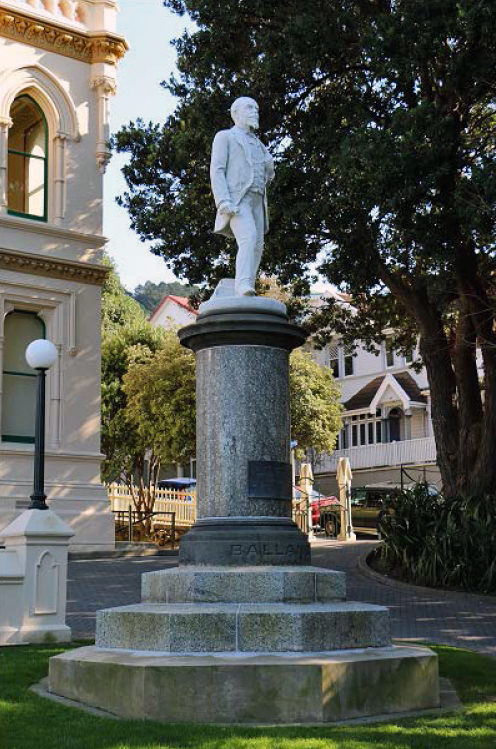
Ballance Statue, Parliament Grounds, Wellington
Ballance Statue
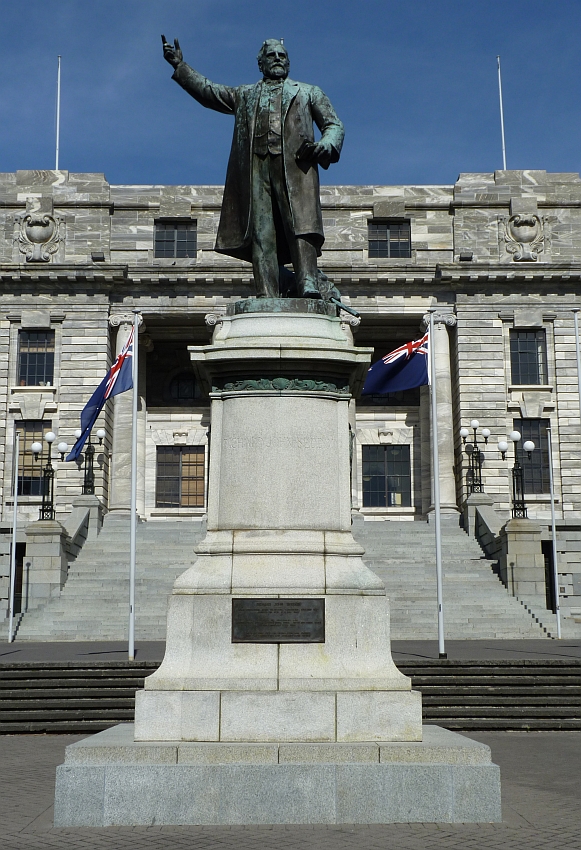
Seddon Statue, Parliament Grounds, Wellington. CC BY-SA 4.0 Image courtesy of commons.wikimedia.org
Seddon Statue
Executive Wing (the Beehive), Wellington. Image courtesy of commons.wikimedia.org
Executive Wing (the Beehive)
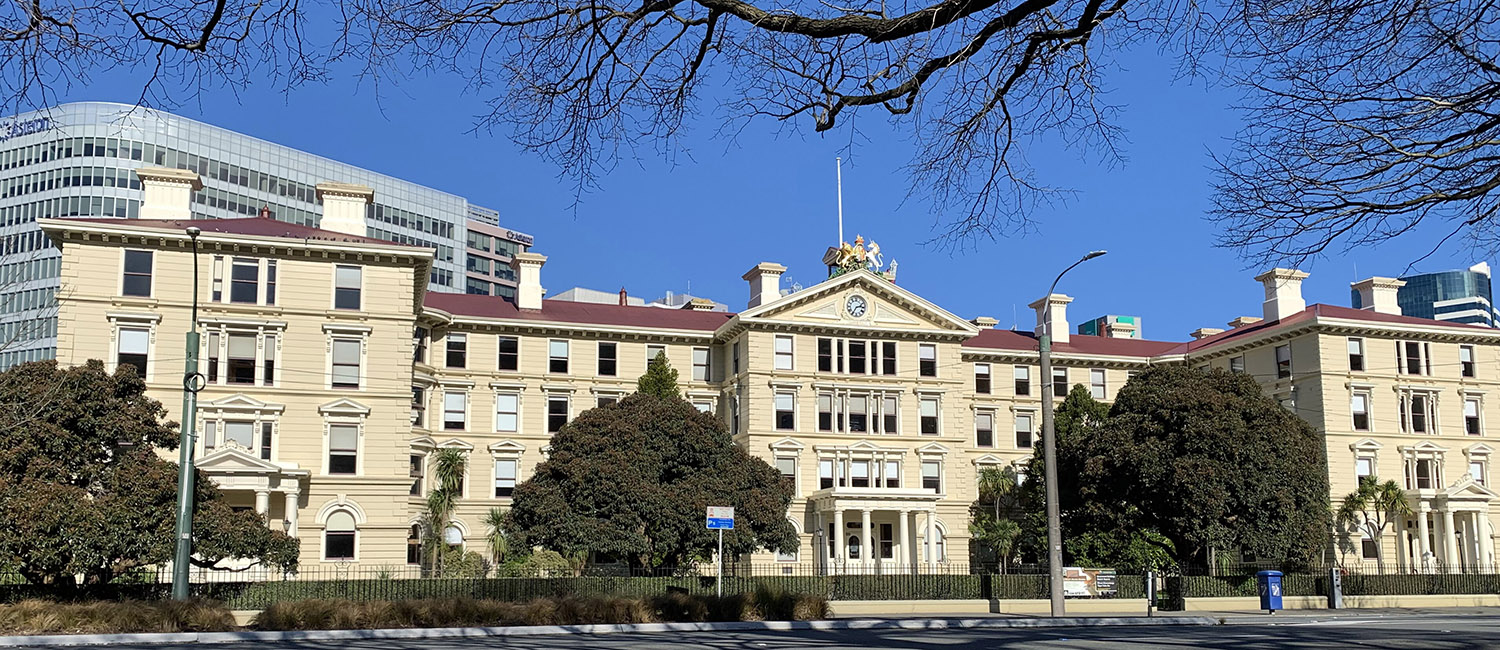
Government Buildings (Former), Wellington. CC BY-SA 4.0 Image courtesy of commons.wikimedia.org
Government Buildings (Former)
Parliament House, Wellington. CC Licence 4.0 Image courtesy of commons.wikimedia.org
Parliament House
Government Centre Historic Area, Wellington. Parliament House CC Licence 4.0 Image courtesy of commons.wikimedia.org
Government Centre Historic Area
Government Buildings (Former), Wellington. CC BY-SA 4.0 Image courtesy of commons.wikimedia.org
Government Buildings (Former)
Ballance Statue, Parliament Grounds, Wellington
Ballance Statue
Parliament House, Wellington. CC Licence 4.0 Image courtesy of commons.wikimedia.org
Parliament House
Seddon Statue, Parliament Grounds, Wellington. CC BY-SA 4.0 Image courtesy of commons.wikimedia.org
Seddon Statue
Government Centre Historic Area, Wellington. Parliament House CC Licence 4.0 Image courtesy of commons.wikimedia.org
Government Centre Historic Area
Executive Wing (the Beehive), Wellington. Image courtesy of commons.wikimedia.org
Executive Wing (the Beehive)
Stay up to date with Heritage this month