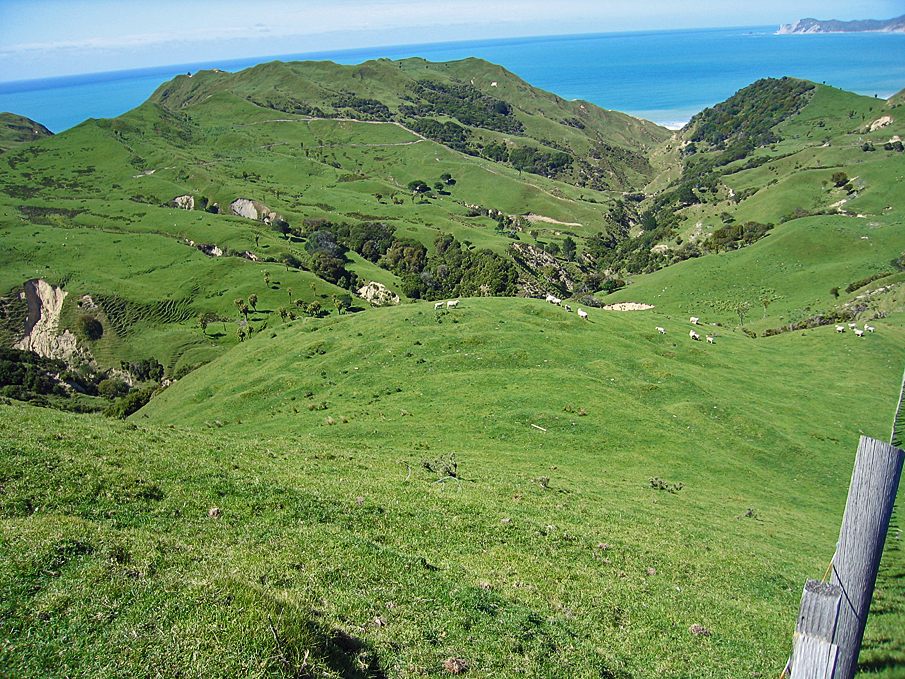
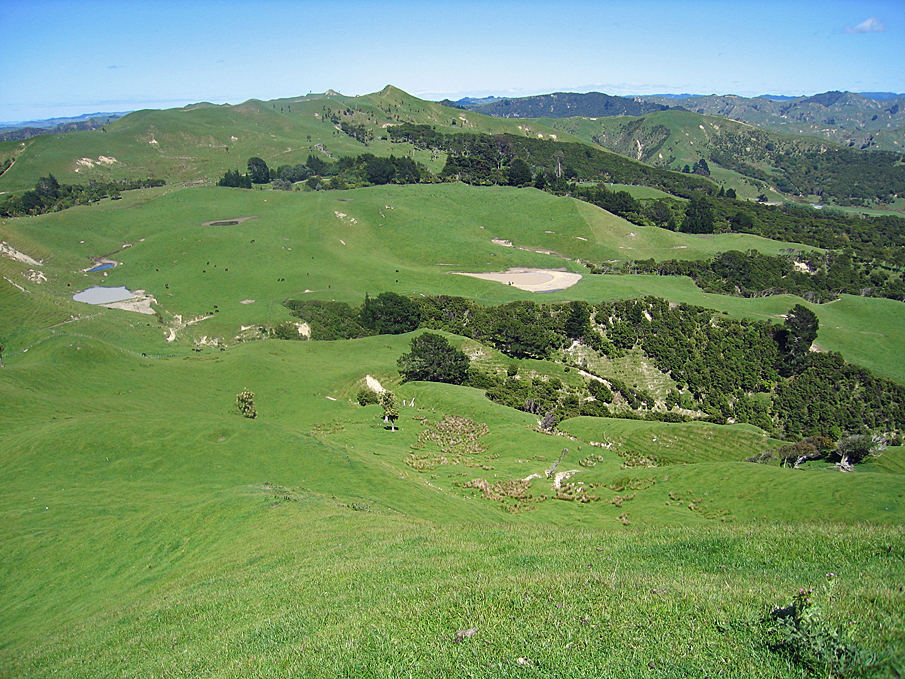
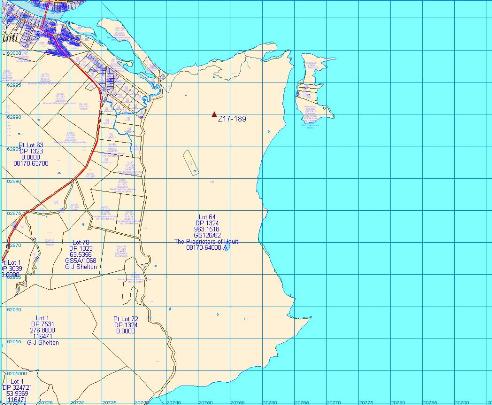
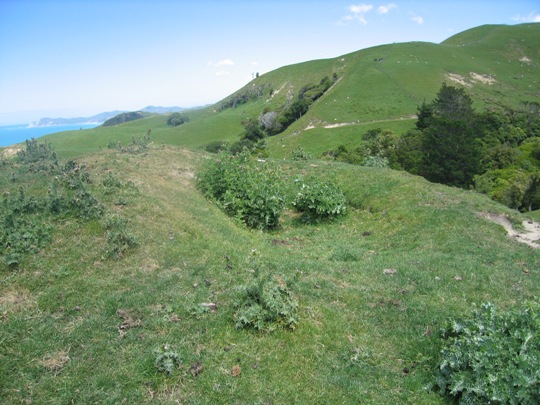
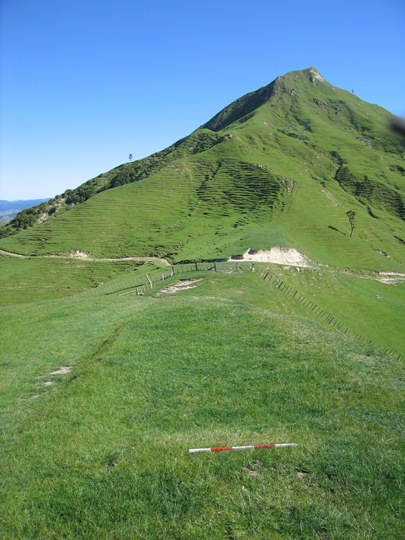
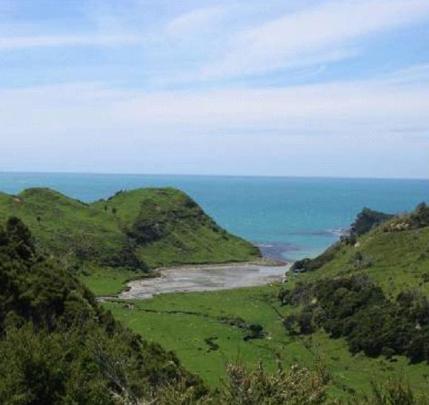
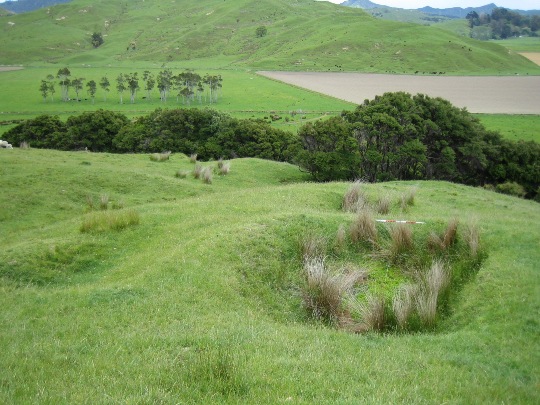
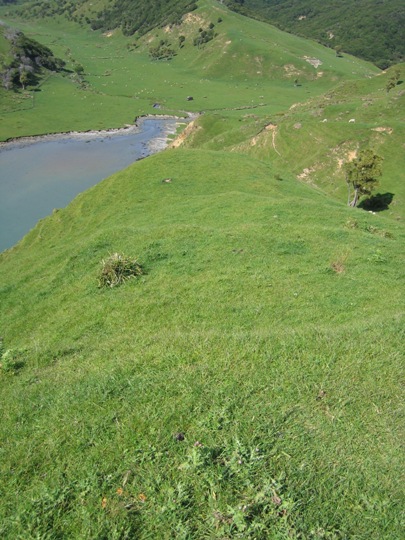
Te Raroa (New Zealand Archaeological Association Site Record Number Z17/31) is a large, well-preserved pa site on Titirangi Station, to the south-east of the Tolaga Bay township. It is located in the south-western part of the Station, at the north-eastern end of a prominent ridgeline which was home to one of the most intensively occupied pa in the Tolaga Bay (Uawa) area -Te Raroa. Te Raroa extended along the entire ridgeline and a now-destroyed pit complex (Z17/32) and pa (Z17/252) are recorded to the southwest of Z17/31. The name Te Raroa applies to all three recorded sites.
Te Raroa is one of the numerous pa that have been recorded in the Tolaga Bay area, particularly in the Mangaheia Valley to the northwest of the township. They are mostly located on the prominent hills and ridgelines, which afforded excellent natural defences and provided commanding views of the surrounding landscape. Together with the many other archaeological sites recorded such as pit and terrace complexes, midden, gardens and urupa, they reflect the intensive occupation of this landscape by Maori from the time of initial Polynesian settlement approximately 700 years ago. A large population was able to be sustained by access to abundant food resources from the sea, rivers, inland forests and fertile soils, which were well-suited to kumara gardening. It has been estimated that the early Maori population of Tolaga Bay totalled approximately 1200; and the main iwi was Te Aitanga a Hauiti.
Te Raroa was built in the time of Pourourangi, the eponymous ancestor of Ngati Porou, who lived during the 15th/ 16th centuries AD. The pa was occupied by many people including Porourangi and his younger brother Tahu Potiki (the eponymous ancestor of the Kai Tahu iwi) before his departure to Te Wai Pounamu (the South Island). Porourangi was very tapu and is believed to have participated in the structural design of the pa, which was built on the remains of previous settlements, rather than its actual construction.
There are differing versions of the meaning of the name 'Te Raroa'; it has been said the pa was named after a man - Raroa, but Te Raroa has also been translated as meaning the 'the long day'. Te Raroa was also one of the main fighting pa of Te Whakatatare-o-te-rangi, the ruling ariki of Te Aitanga a Hauiti at the time of Captain Cook's visit to Tolaga Bay in 1769. Te Raroa was one of the most heavily occupied pa in the wider East Coast region, and large numbers of people were still found to be living at the pa into the 18th and early 19th centuries.
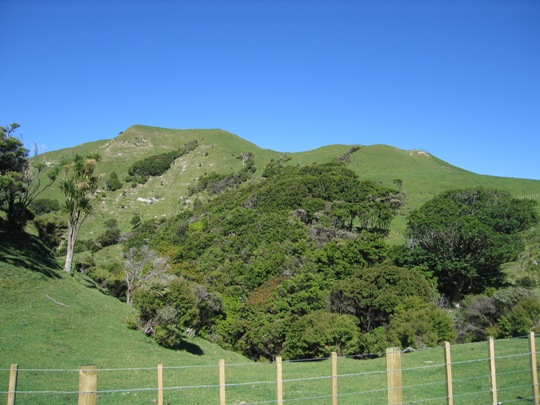
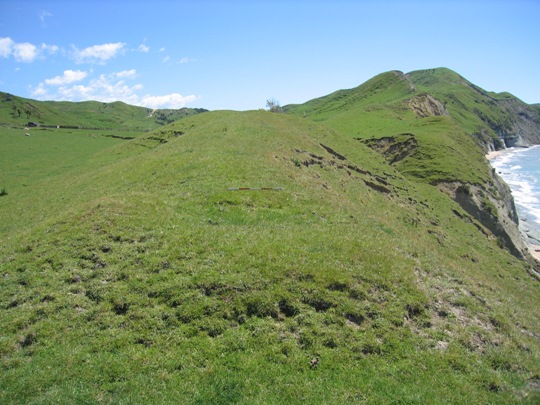
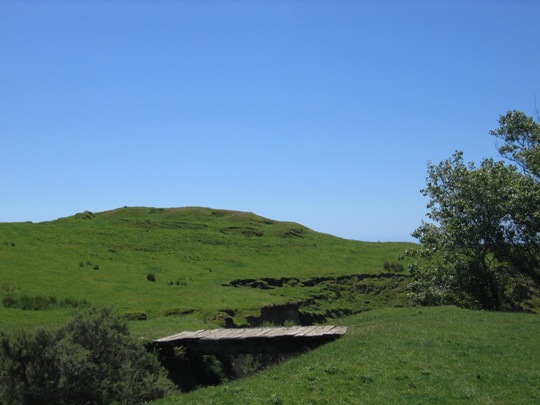
The north-eastern part of Te Raroa (Z17/31) is located approximately 300 metres south of the saddle at the southern of the Titirangi ridgeline, where a farm road which leads from the southern entrance to the Station towards the coast. It extends along approximately 350 metres of the ridgeline, and is currently in pasture, grazed by cattle and sheep.
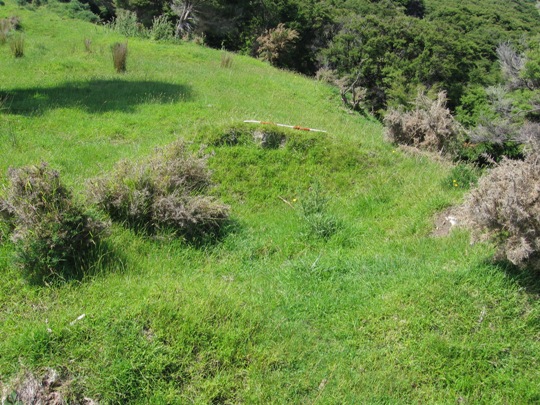
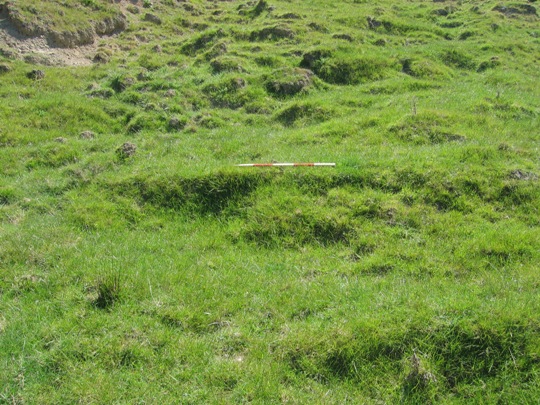
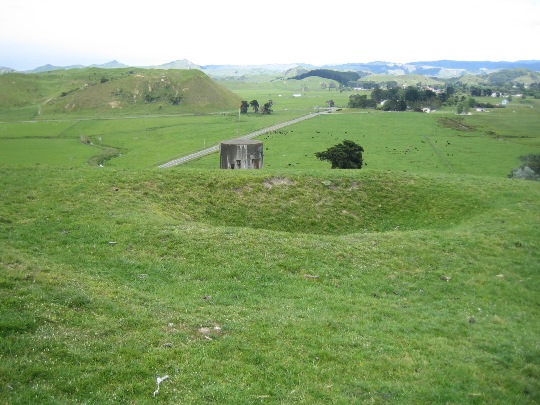
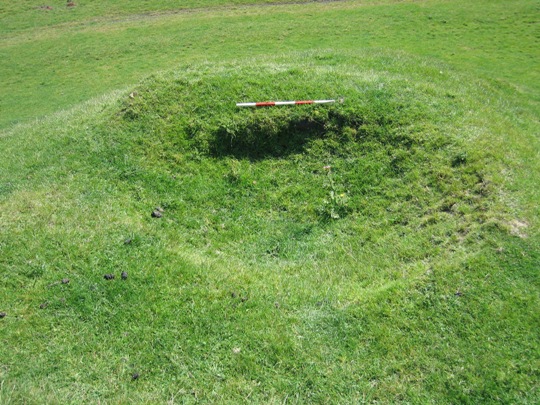
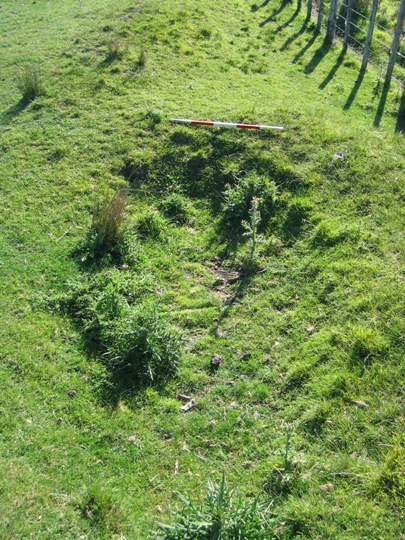
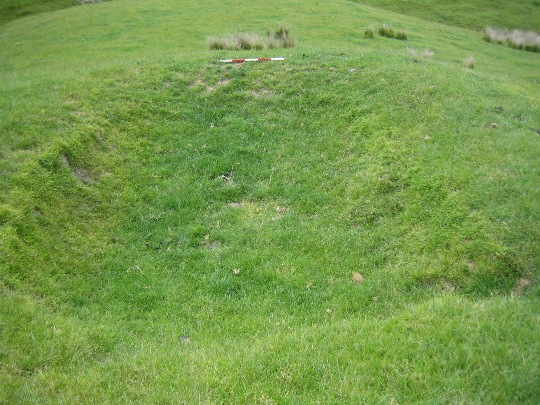
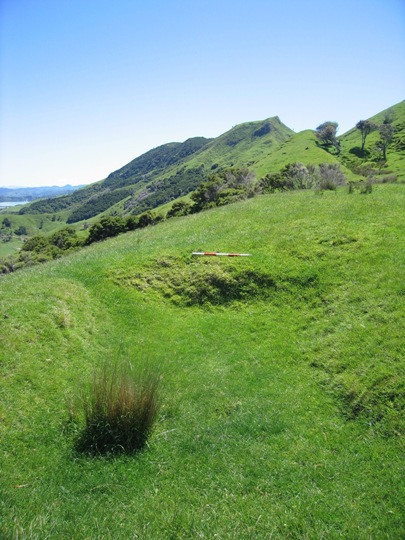
At the time of its initial recording by the Gisborne Museum in 1971, Z17/31 was described as a complex of pits (for storing kumara) situated on a wide terrace, with a high citadel above that had 'naturally steep sides'. These pits were recorded as both square and rectangular, with raised rims, and from the citadel another complex of 20 pits was observed to the southwest. No ditch and bank defences were recorded but the absence of artificial defences is not uncommon for pa in the East Coast region; a number of pa are defined by groupings of pits and terraces in naturally defended locations such as this.
Z17/31 was revisited by archaeologist Kevin Jones during his archaeological survey work in the Whangara, Tolaga Bay and Uawa Catchment areas in 1982-1983. This survey work was undertaken to gain information about the nature of prehistoric settlement in this locality, and also to evaluate specific sites for registration under the Historic Places Act 1980. Jones mapped the site in detail, incorporating the main part of the pa along the ridgeline, the pit/drain complexes to the south and west, and three isolated pits on a ridgeline to the west of the southern pit/drain complex. He noted that the pa was in excellent order, and described it as 'large by Tolaga Bay standards'. Jones later estimated that the pa could have sustained a population of 240.
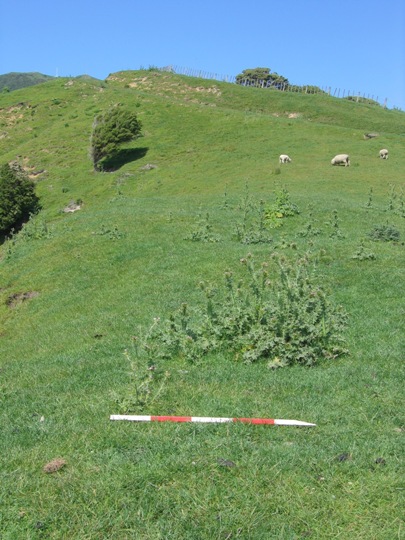
Archaeologist Vanessa Tanner revisited the site again in 2000 as part of the New Zealand Archaeological Association Site Recording Scheme Upgrade Project, and recorded that it was being damaged by cattle. The southern end of the pa remained in good condition, but the top was suffering from stock damage, and the western pit complex was regarded as being in poor condition. A 2007 NZHPT site visit revealed that stock damage was an ongoing issue, but no major changes to the site were noted.
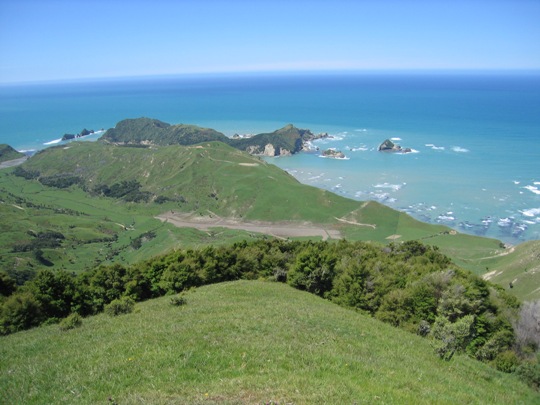
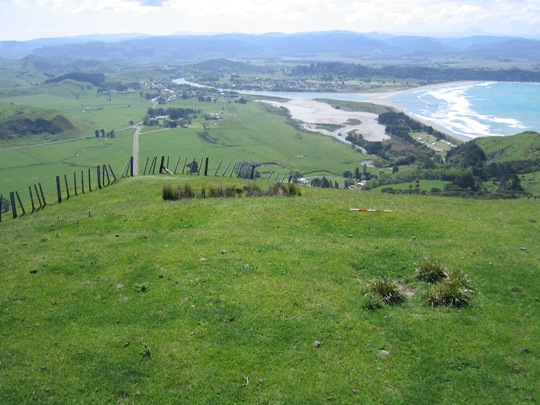
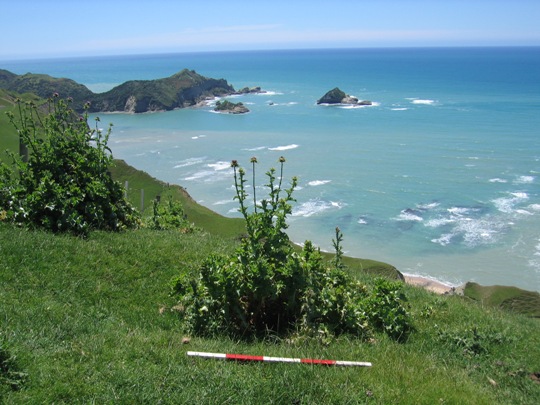
There are a number of pa in the Tolaga Bay area, but pa site Z17/31 is in very good preservation overall and is particularly extensive. It is a visually impressive site and provides expansive views of the surrounding area. Z17/31 is of considerable cultural, traditional and spiritual significance to local iwi Te Aitanga a Hauiti, as it forms the north-eastern part of Te Raroa, one of the main fighting pa of Te Whakatatare-o-te-rangi - the ruling chief at the time of Captain Cook's arrival in Tolaga Bay in 1769.This connection with the arrival of Captain Cook is of historical importance, as is the fact that Te Raroa was occupied through into the early 19th century.
Te Raroa is one of the numerous pa that have been recorded in the Tolaga Bay area, particularly in the Mangaheia Valley to the northwest of the township. They are mostly located on the prominent hills and ridgelines, which afforded excellent natural defences and provided commanding views of the surrounding landscape. Together with the many other archaeological sites recorded such as pit and terrace complexes, midden, gardens and urupa, they reflect the intensive occupation of this landscape by Maori from the time of initial Polynesian settlement approximately 700 years ago. A large population was able to be sustained by access to abundant food resources from the sea, rivers, inland forests and fertile soils, which were well-suited to kumara gardening. It has been estimated that the early Maori population of Tolaga Bay totalled approximately 1200; and the main iwi was Te Aitanga a Hauiti.
Te Raroa was built in the time of Pourourangi, the eponymous ancestor of Ngati Porou, who lived during the 15th/ 16th centuries AD. The pa was occupied by many people including Porourangi and his younger brother Tahu Potiki (the eponymous ancestor of the Kai Tahu iwi) before his departure to Te Wai Pounamu (the South Island). Porourangi was very tapu and is believed to have participated in the structural design of the pa, which was built on the remains of previous settlements, rather than its actual construction.
There are differing versions of the meaning of the name 'Te Raroa'; it has been said the pa was named after a man - Raroa, but Te Raroa has also been translated as meaning the 'the long day'. Te Raroa was also one of the main fighting pa of Te Whakatatare-o-te-rangi, the ruling ariki of Te Aitanga a Hauiti at the time of Captain Cook's visit to Tolaga Bay in 1769. Te Raroa was one of the most heavily occupied pa in the wider East Coast region, and large numbers of people were still found to be living at the pa into the 18th and early 19th centuries.
The north-eastern part of Te Raroa (Z17/31) is located approximately 300 metres south of the saddle at the southern of the Titirangi ridgeline, where a farm road which leads from the southern entrance to the Station towards the coast. It extends along approximately 350 metres of the ridgeline, and is currently in pasture, grazed by cattle and sheep.
At the time of its initial recording by the Gisborne Museum in 1971, Z17/31 was described as a complex of pits (for storing kumara) situated on a wide terrace, with a high citadel above that had 'naturally steep sides'. These pits were recorded as both square and rectangular, with raised rims, and from the citadel another complex of 20 pits was observed to the southwest. No ditch and bank defences were recorded but the absence of artificial defences is not uncommon for pa in the East Coast region; a number of pa are defined by groupings of pits and terraces in naturally defended locations such as this.
Z17/31 was revisited by archaeologist Kevin Jones during his archaeological survey work in the Whangara, Tolaga Bay and Uawa Catchment areas in 1982-1983. This survey work was undertaken to gain information about the nature of prehistoric settlement in this locality, and also to evaluate specific sites for registration under the Historic Places Act 1980. Jones mapped the site in detail, incorporating the main part of the pa along the ridgeline, the pit/drain complexes to the south and west, and three isolated pits on a ridgeline to the west of the southern pit/drain complex. He noted that the pa was in excellent order, and described it as 'large by Tolaga Bay standards'. Jones later estimated that the pa could have sustained a population of 240.
Archaeologist Vanessa Tanner revisited the site again in 2000 as part of the New Zealand Archaeological Association Site Recording Scheme Upgrade Project, and recorded that it was being damaged by cattle. The southern end of the pa remained in good condition, but the top was suffering from stock damage, and the western pit complex was regarded as being in poor condition. A 2007 NZHPT site visit revealed that stock damage was an ongoing issue, but no major changes to the site were noted.
There are a number of pa in the Tolaga Bay area, but pa site Z17/31 is in very good preservation overall and is particularly extensive. It is a visually impressive site and provides expansive views of the surrounding area. Z17/31 is of considerable cultural, traditional and spiritual significance to local iwi Te Aitanga a Hauiti, as it forms the north-eastern part of Te Raroa, one of the main fighting pa of Te Whakatatare-o-te-rangi - the ruling chief at the time of Captain Cook's arrival in Tolaga Bay in 1769.This connection with the arrival of Captain Cook is of historical importance, as is the fact that Te Raroa was occupied through into the early 19th century.