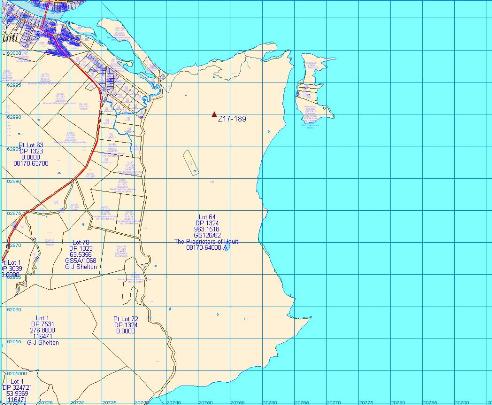
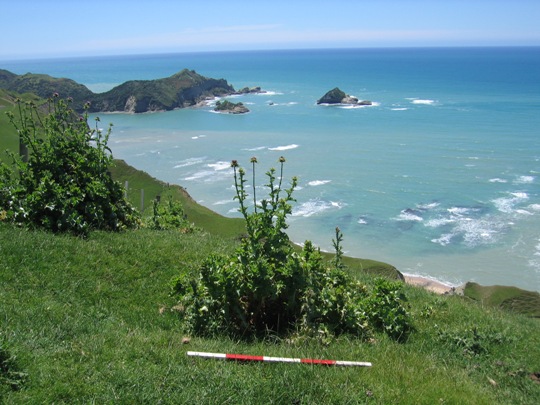
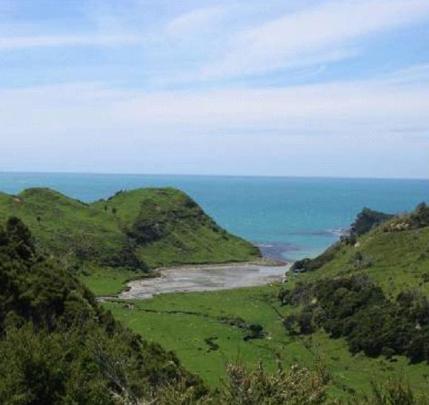
Te Kararoa (New Zealand Archaeological Association Site Record Number Z17/310) is a ridge top pa of considerable cultural, traditional and historical significance, and forms part of the dense archaeological landscape of the Tolaga Bay (Uawa) area. It is located at Cook's Cove on Titirangi Station, to the south-east of the Tolaga Bay township.
Te Kararoa is one of the numerous pa that have been recorded in the Tolaga Bay area, mostly located on the prominent hills and ridgelines which afforded excellent natural defences and provided commanding views of the surrounding landscape. These pa and the many other recorded archaeological sites such as pit and terrace complexes, midden, gardens and urupa reflect the intensive occupation of this landscape by Maori from the time of initial Polynesian settlement approximately 700 years ago. Access to abundant food resources from the sea, rivers, inland forests and horticultural production (kumara) meant that a large population could be sustained. It has been estimated that the early Maori population of Tolaga Bay totalled approximately 1200; and the main iwi was Te Aitanga a Hauiti.
Traditional Maori evidence indicates that Te Kararoa was one of the major fighting pa of Te Whakatatare-o-te-rangi, a highly-ranked ariki within Te Aitanga a Hauiti, and in the wider East Coast region. Te Whakatatare-o-te-rangi was the ruling Te Aitanga a Hauiti ariki at the time of Captain Cook's visit to Cook's Cove in the HMS Endeavour in 1769, and he was the grandfather of Te Kani-a-Takirau, Tolaga Bay's paramount chief during the early - mid 19th century.
Te Kararoa was deserted at the time of Cook's visit in 1769 - the pa may only have been occupied in times of warfare, or it may be that the pa was only occupied seasonally, with the inhabitants tending to their gardens during the time of Cook's visit (in spring). However, the pa may also have been completely abandoned; as Joseph Banks (who accompanied Cook on his voyage) noted only 'several deserted houses', where as archaeological evidence suggests that there had been many houses on the terraces of the pa. It has been estimated that the pa could have sustained a population of up to 87 individuals.
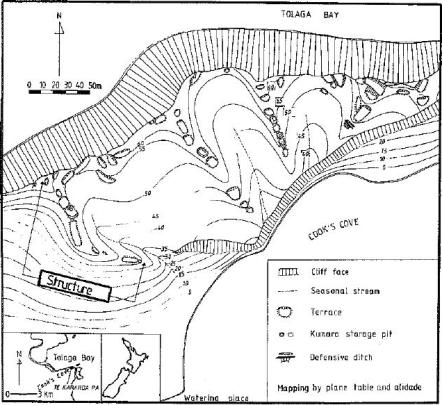
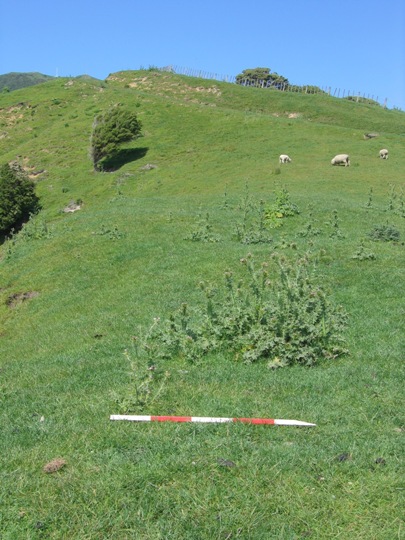
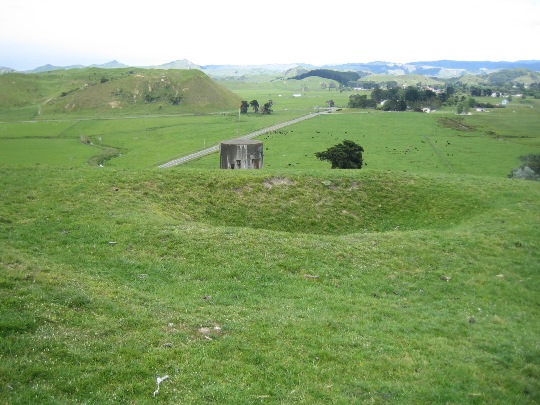
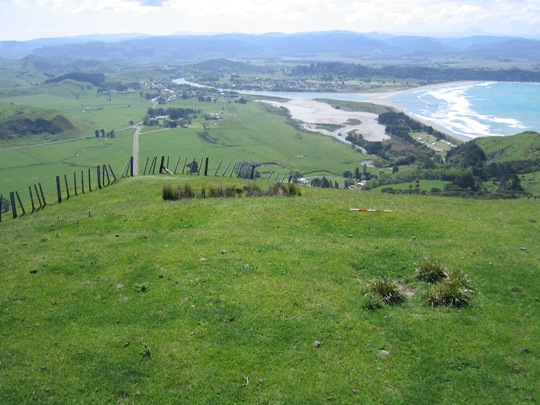
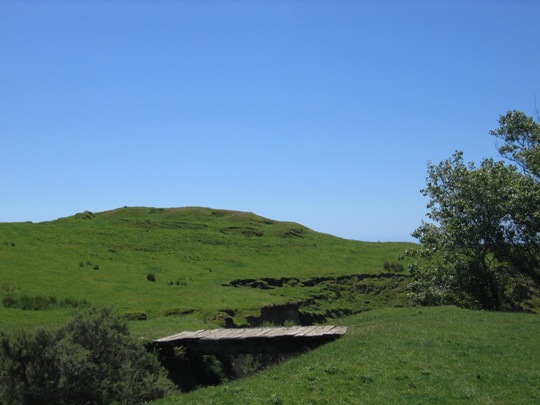
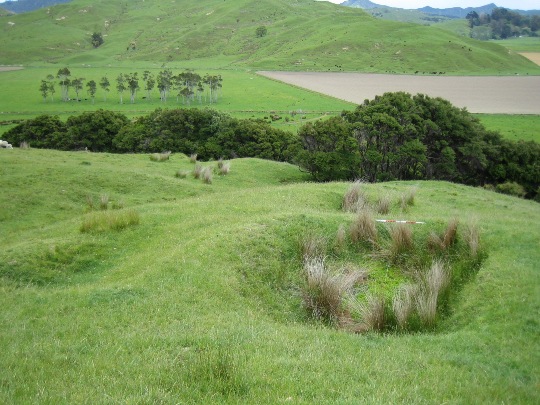
Joseph Banks climbed to the top of Te Kararoa, to more closely observe a 'fence of poles' first sited offshore on the HMS Endeavour. The structure was found to consist of two rows of poles 14-16 feet (4.2 - 4.9 metres) high, and spaced 10 feet (3 metres) apart from one another. A distance of approximately 6 feet (1.8 metres) separated the two rows, but sticks were laid across the tops of the rows, connecting them. Banks also noted that a ditch ran parallel to the fence, curving down the side of the hill for approximately 100 yards (91 metres), but he could not ascertain its purpose. This 'fence of poles' has subsequently been interpreted as a defensive structure - either a fighting stage or double palisade row, designed to prevent enemies from entering the pa. It is believed to have been located at the south-western end of Te Kararoa. Two further low fence-like structures were observed and recorded by Cook and his botanist, Herman Sporing to the northeast of the 'fence of poles', and the remains of a ditch can be seen in this locality today.
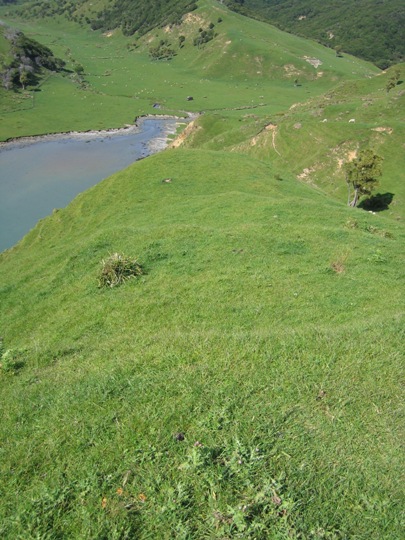
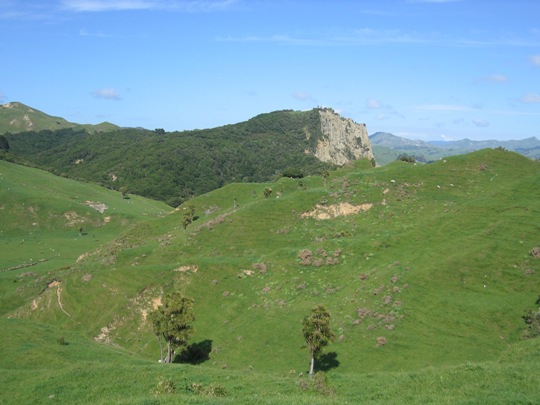
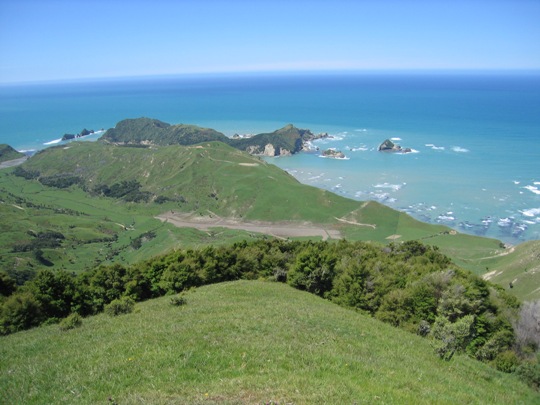
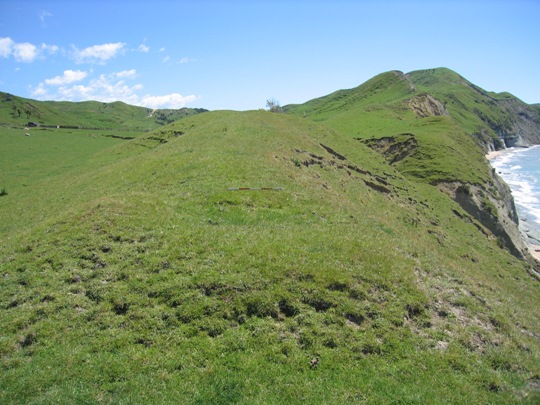
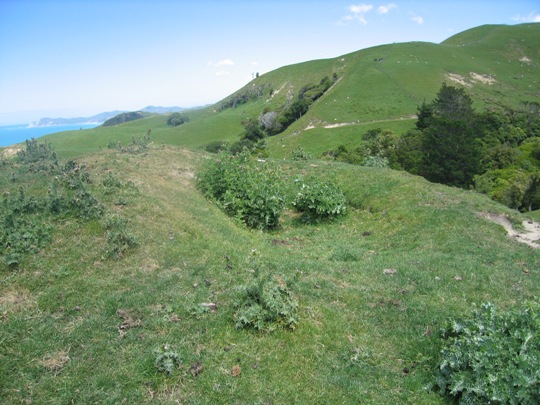
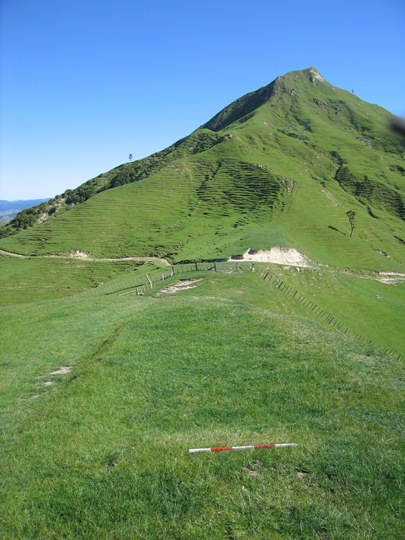
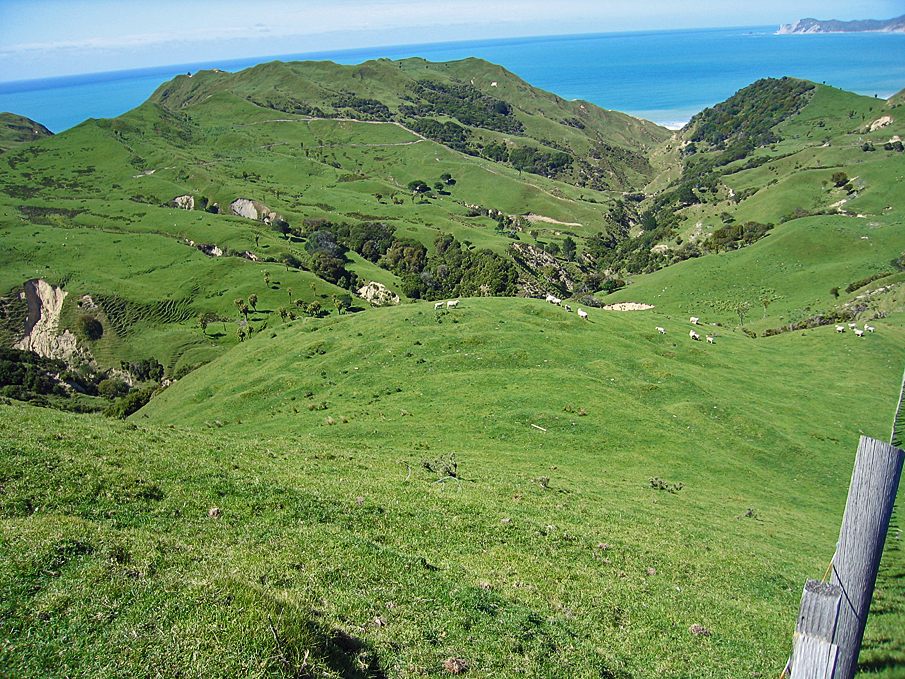
Te Kararoa extends across the small peninsula on the northern side of Cook's Cove, occupying approximately 500 metres of ridgeline in total. It is in pasture and is currently grazed by sheep. Stock tracks lead from the bottom of the peninsula up to the top area of the pa.
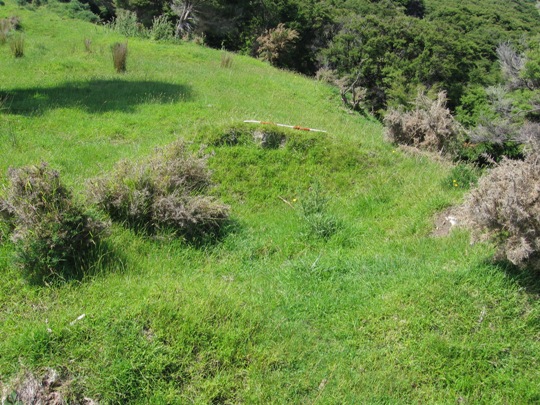
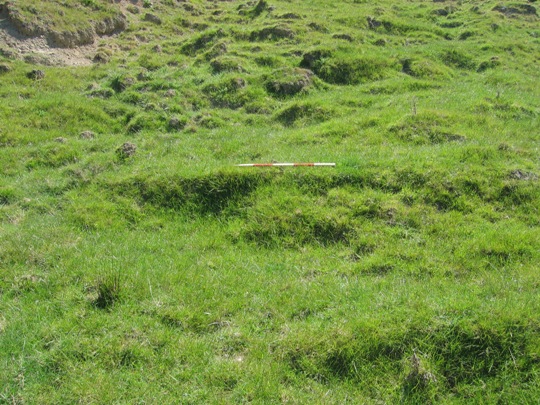
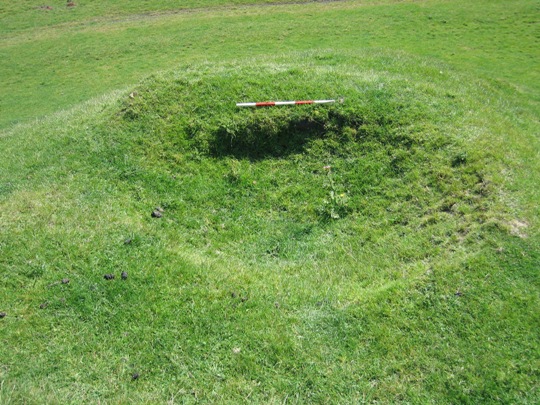
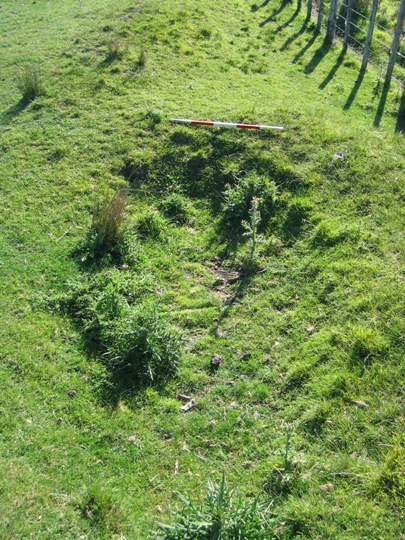
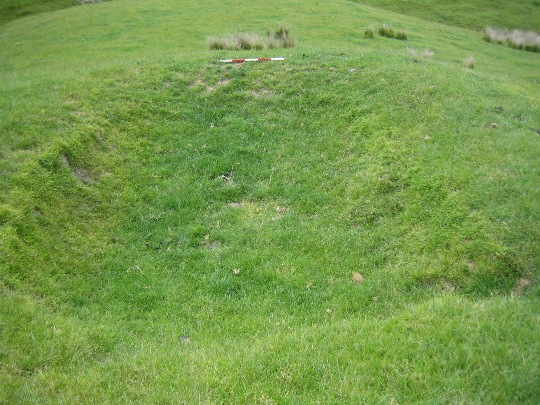
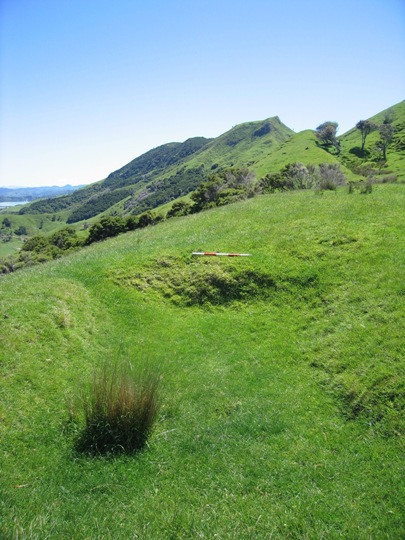
Te Kararoa was first recorded by archaeologist Kevin Jones during his archaeological survey work in the Whangara, Tolaga Bay and Uawa Catchment areas in 1982-1983. This survey work was undertaken to gain information about the nature of prehistoric settlement in this locality, and also to evaluate specific sites for registration under the Historic Places Act 1980. Jones noted terracing along the main ridgeline and side ridges, and completed a detailed map of the pa, marking the location of the terraces, kumara storage pits, and the remains of a defensive ditch. With regard to site condition, some slumping and infilling was noted. Jones later extracted archaeological material from the slumped area for radiocarbon dating, providing a date of 1424-1657 A.D.
Archaeologist Vanessa Tanner revisited Te Kararoa in 1999 as part of the New Zealand Archaeological Association Site Recording Scheme Upgrade Project, and noted no major changes. Stock damage was identified as a problem, but the pa remained in 'average/good' condition. A New Zealand Historic Places Trust site visit in 2007 also revealed no further changes to the site. During the time of this visit, archaeologists from the University of Otago Anthropology Department (working across Cook's Cove on the excavation of midden site Z17/311) advised that they had identified features not shown on the original site map, and undertook a detailed re-mapping exercise.
Significance summary:
Te Kararoa is typical of pa in the Tolaga Bay area from an archaeological viewpoint, but it has particular cultural and traditional significance through its association with the prominent Te Aitanga a Hauiti chief - Te Whakatatare-o-te-rangi. Te Kararoa is also of considerable historical significance through its connection with Captain James Cook, and the 1769 visit of the HMS Endeavour to Cook's Cove and Tolaga Bay.
Te Kararoa is one of the numerous pa that have been recorded in the Tolaga Bay area, mostly located on the prominent hills and ridgelines which afforded excellent natural defences and provided commanding views of the surrounding landscape. These pa and the many other recorded archaeological sites such as pit and terrace complexes, midden, gardens and urupa reflect the intensive occupation of this landscape by Maori from the time of initial Polynesian settlement approximately 700 years ago. Access to abundant food resources from the sea, rivers, inland forests and horticultural production (kumara) meant that a large population could be sustained. It has been estimated that the early Maori population of Tolaga Bay totalled approximately 1200; and the main iwi was Te Aitanga a Hauiti.
Traditional Maori evidence indicates that Te Kararoa was one of the major fighting pa of Te Whakatatare-o-te-rangi, a highly-ranked ariki within Te Aitanga a Hauiti, and in the wider East Coast region. Te Whakatatare-o-te-rangi was the ruling Te Aitanga a Hauiti ariki at the time of Captain Cook's visit to Cook's Cove in the HMS Endeavour in 1769, and he was the grandfather of Te Kani-a-Takirau, Tolaga Bay's paramount chief during the early - mid 19th century.
Te Kararoa was deserted at the time of Cook's visit in 1769 - the pa may only have been occupied in times of warfare, or it may be that the pa was only occupied seasonally, with the inhabitants tending to their gardens during the time of Cook's visit (in spring). However, the pa may also have been completely abandoned; as Joseph Banks (who accompanied Cook on his voyage) noted only 'several deserted houses', where as archaeological evidence suggests that there had been many houses on the terraces of the pa. It has been estimated that the pa could have sustained a population of up to 87 individuals.
Joseph Banks climbed to the top of Te Kararoa, to more closely observe a 'fence of poles' first sited offshore on the HMS Endeavour. The structure was found to consist of two rows of poles 14-16 feet (4.2 - 4.9 metres) high, and spaced 10 feet (3 metres) apart from one another. A distance of approximately 6 feet (1.8 metres) separated the two rows, but sticks were laid across the tops of the rows, connecting them. Banks also noted that a ditch ran parallel to the fence, curving down the side of the hill for approximately 100 yards (91 metres), but he could not ascertain its purpose. This 'fence of poles' has subsequently been interpreted as a defensive structure - either a fighting stage or double palisade row, designed to prevent enemies from entering the pa. It is believed to have been located at the south-western end of Te Kararoa. Two further low fence-like structures were observed and recorded by Cook and his botanist, Herman Sporing to the northeast of the 'fence of poles', and the remains of a ditch can be seen in this locality today.
Te Kararoa extends across the small peninsula on the northern side of Cook's Cove, occupying approximately 500 metres of ridgeline in total. It is in pasture and is currently grazed by sheep. Stock tracks lead from the bottom of the peninsula up to the top area of the pa.
Te Kararoa was first recorded by archaeologist Kevin Jones during his archaeological survey work in the Whangara, Tolaga Bay and Uawa Catchment areas in 1982-1983. This survey work was undertaken to gain information about the nature of prehistoric settlement in this locality, and also to evaluate specific sites for registration under the Historic Places Act 1980. Jones noted terracing along the main ridgeline and side ridges, and completed a detailed map of the pa, marking the location of the terraces, kumara storage pits, and the remains of a defensive ditch. With regard to site condition, some slumping and infilling was noted. Jones later extracted archaeological material from the slumped area for radiocarbon dating, providing a date of 1424-1657 A.D.
Archaeologist Vanessa Tanner revisited Te Kararoa in 1999 as part of the New Zealand Archaeological Association Site Recording Scheme Upgrade Project, and noted no major changes. Stock damage was identified as a problem, but the pa remained in 'average/good' condition. A New Zealand Historic Places Trust site visit in 2007 also revealed no further changes to the site. During the time of this visit, archaeologists from the University of Otago Anthropology Department (working across Cook's Cove on the excavation of midden site Z17/311) advised that they had identified features not shown on the original site map, and undertook a detailed re-mapping exercise.
Significance summary:
Te Kararoa is typical of pa in the Tolaga Bay area from an archaeological viewpoint, but it has particular cultural and traditional significance through its association with the prominent Te Aitanga a Hauiti chief - Te Whakatatare-o-te-rangi. Te Kararoa is also of considerable historical significance through its connection with Captain James Cook, and the 1769 visit of the HMS Endeavour to Cook's Cove and Tolaga Bay.